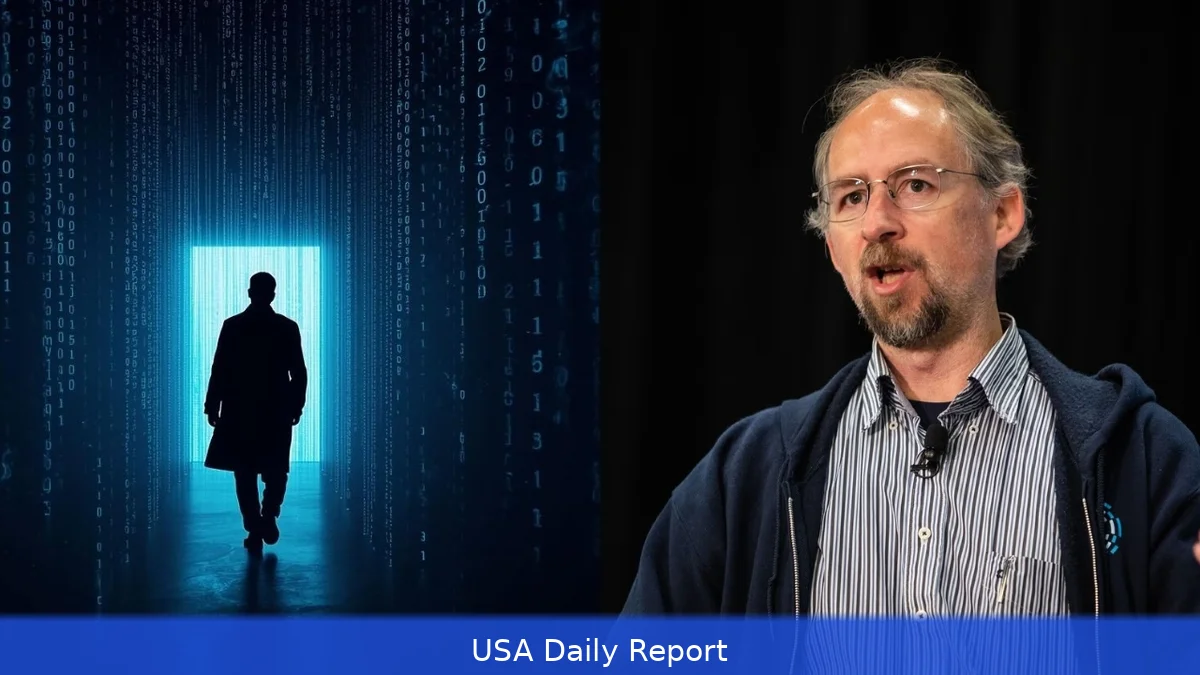
Bitcoin’s creator, known only as Satoshi Nakamoto, has long been one of the biggest mysteries in finance and technology. After years of speculation, The New York Times says it has uncovered strong clues pointing to one man — Adam Back, a British cryptographer and blockchain pioneer. But Back himself firmly denies being the elusive figure behind the world’s first cryptocurrency.
The Hunt for Satoshi Nakamoto’s True Identity
Bitcoin shook the financial world when it appeared in 2009, promising a decentralized, digital currency free from banks and governments. But the creator, Satoshi Nakamoto, vanished without a trace, leaving behind only the groundbreaking white paper and the original code. Since then, reporters, hackers, and enthusiasts have tried to crack the code of Nakamoto’s identity, with no definitive answer.
Honestly, now, The New York Times investigative reporter John Carreyrou claims to have made a breakthrough. His research points to Adam Back, a British cryptographer and CEO of blockchain firm Blockstream, as the man behind the pseudonym. The reasoning? A mixture of linguistic quirks, digital footprints, and historical context.
Small Details, Big Clues
Carreyrou’s investigation zooms in on something unusual — grammar. Both Nakamoto and Back appear to struggle with hyphen usage in the same odd way. They tend to hyphenate compound nouns incorrectly and skip hyphens where they’re supposed to use them. That might sound trivial but in forensic linguistics, such habits can reveal common authorship.
Further, Back and Nakamoto share rare technical language. For example, in a 2004 post to the Cypherpunks mailing list, Back used the phrase “partial pre-image,” which also appears in Nakamoto’s 2008 Bitcoin white paper and related writings. Carreyrou’s team ran an AI analysis on a database of over 30,000 potential Nakamotos and found Back’s grammar the closest match.
That’s not all. Adam Back was reportedly the first person Nakamoto contacted by email when Bitcoin was still in its infancy. The two exchanged messages, and Back’s earlier work on Hashcash — a proof-of-work system designed to limit email spam — is cited directly in the Bitcoin white paper. Hashcash laid some of the technical groundwork Bitcoin built upon.
Back’s Role in Early Crypto Circles
Back has been a well-known figure in cryptography since the early 1990s. He was active on the Cypherpunks mailing list, a community of privacy advocates and cryptographers focused on digital privacy, electronic cash, and cryptography’s role in society. Back invented Hashcash in the late 1990s, a system that uses computational work to prevent spam and denial-of-service attacks.
His early focus on privacy and electronic cash overlaps directly with Bitcoin’s goals. According to Carreyrou, Back’s own research papers from the early 2000s foreshadow many Bitcoin ideas. When Nakamoto stopped communicating in 2011, Back started talking more about Bitcoin publicly, which some interpret as an attempt to take over the narrative or continue the project’s development.
Back Pushes Back
Adam Back doesn’t buy the theory. On social media platform X, he denied being Satoshi Nakamoto and criticized Carreyrou’s report as confirmation bias. Back explained that his interest in cryptography and electronic cash dates back decades, long before Bitcoin, and that his research naturally overlaps with Bitcoin’s principles.
“I'm not Satoshi, but I was early in laser focus on the positive societal implications of cryptography, online privacy and electronic cash,” Back said. He also expressed frustration at the report’s claims, especially after refusing to provide metadata of his communications with Nakamoto, which Carreyrou suggested were actually emails Back sent to himself.
The dynamic between Back and the reporter adds another layer of intrigue. Back described their exchanges as polite but revealed that he stopped responding when pressed for more details about their interactions with Nakamoto. The New York Times report notes Back’s reluctance to cooperate raises questions but doesn’t confirm anything.
Why the Mystery Matters
Bitcoin’s creator has always been wrapped in enigma, and that mystery has been part of its allure and its challenge. Knowing who Satoshi Nakamoto is could have big implications for the cryptocurrency world. It could lend legitimacy, unlock access to vast amounts of Bitcoin, or even influence the market if that person or group decides to cash out or reveal their full identity.
But the identity itself might be less important than the technology and community Bitcoin inspired. Many in the crypto world argue that Bitcoin’s decentralized nature means no single person controls it anymore — which is partly why Nakamoto vanished.
Still, Carreyrou’s investigation adds fuel to the fire. If Adam Back is Satoshi, it rewrites part of crypto history. If not, it shows how tough it's to separate fact from speculation in the digital age.
Thing is, what’s clear is that Bitcoin’s roots lie deep in the cypherpunk movement and cryptography research of the 1990s and 2000s. Figures like Back helped build the foundation for blockchain and cryptocurrencies, whether or not they were the mysterious Satoshi.
Looking Ahead
As Bitcoin approaches its 15th birthday, the hunt for Nakamoto’s identity isn’t going away anytime soon. The New York Times report may inspire other investigations or new digital forensics techniques to dig deeper into Bitcoin’s origins.
For investors and enthusiasts, the story is a reminder of how complex and layered the cryptocurrency world is — full of puzzles, personalities, and technical breakthroughs.
And Adam Back? Whether or not he’s Satoshi Nakamoto, he remains a key figure in the ongoing evolution of blockchain technology and digital privacy.
Related Articles
- White House Report Challenges Bank Lobby on Stablecoin Yield Impact
- Dow Climbs, Oil Prices Edge Up Amid Fragile Ceasefire and Cybersecurity Concerns
- JPMorgan Sees Market Still Leaning Toward US Rate Cuts Despite Fed Caution
The New York Times’ claim that Adam Back might be Bitcoin’s creator adds a new chapter to the decades-old mystery. Back’s denial doesn’t end the debate — it only thickens the plot. For now, Satoshi Nakamoto remains a ghost in the machine.


