
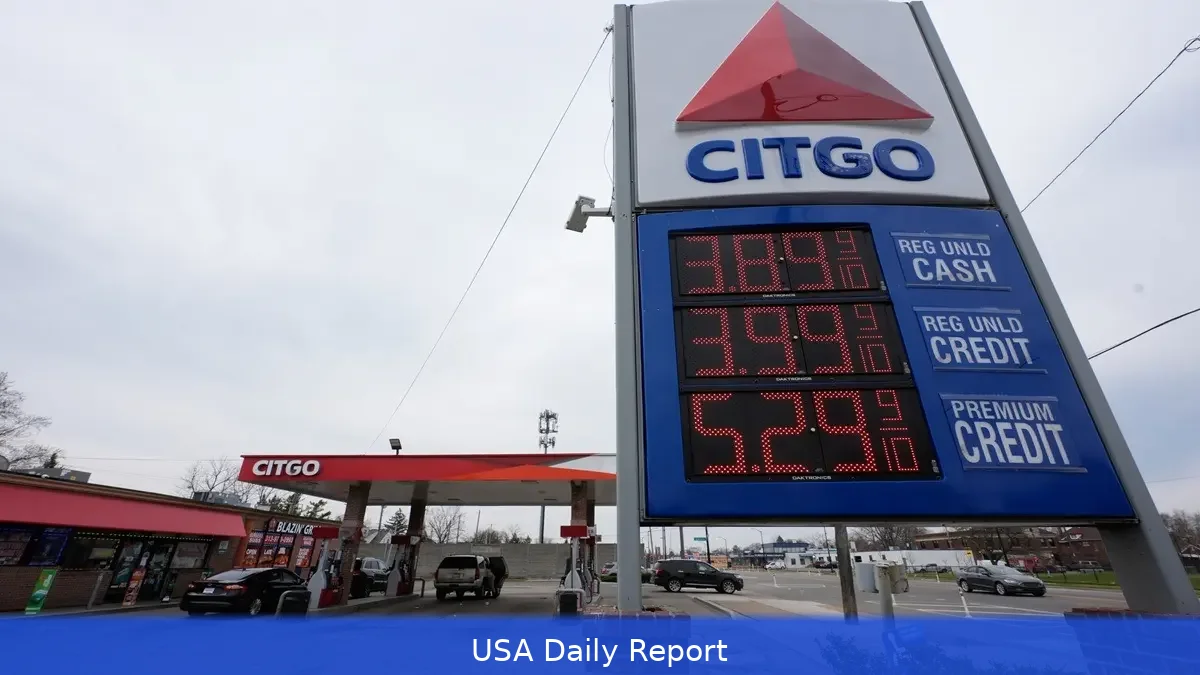
Gas prices in the US have climbed above $4 a gallon for the first time since 2022, rattling consumers already stretched by inflation. Gas prices jumped as the war in Iran disrupted oil supplies, sparking worries about inflation rising again.
Gas Prices Hit Highest Levels in Years
Drivers across the United States are feeling the pinch at the pump. According to AAA, the national average price for a gallon of regular gasoline recently topped $4.02, marking the highest level since late 2022. This sharp increase followed the February 28 U.S. And Israeli strikes against Iran, which rattled global oil markets. Benchmark U.S. Crude oil prices surged from around $70 per barrel to nearly $98, while Brent crude topped $108.
Amanda Acosta from Louisiana says she's frustrated by the rising prices. “I’m getting way less gas and paying way more money,” she said. Thelma Williams, a Mississippi resident and Army Reserve veteran, added that she hopes the conflict ends soon, as many families might not manage these costs much longer.
Inflation Expectations Rise Amid Conflict
The conflict has made people more worried about inflation. The Conference Board reported that its consumer confidence index edged up slightly to 91.8 in March from 91 in February. But the optimism masks rising anxiety elsewhere, especially about inflation. Respondents’ expectations for consumer prices over the next 12 months have surged to levels not seen since August 2025, when tariff concerns were at their peak.
Heather Long, chief economist at Navy Federal Credit Union, noted that while consumer spending held up in March despite rising gas prices, the worst of the inflation shock will probably hit in the second quarter. Government data showed a 2.8% rise in inflation in January, even before the Iran conflict heated up. Core inflation, which excludes food and energy prices, nudged up to 3.1%, the highest in nearly two years.

Supply Chain Disruptions Add to Economic Strain
The war has also disrupted supply chains, especially through the Strait of Hormuz, a vital shipping route for oil and other commodities. TS Lombard’s chief economist Freya Beamish warned that the conflict will leave long-lasting "scarring" on supply chains, keeping energy prices elevated for the foreseeable future.
This affects not only fuel but also fertilizers, helium, and other important products.
Beamish outlined three possible scenarios for the U.S. Economy amid these disruptions. One possibility is a temporary rise in inflation pushing the economy into recession. Another is stagflation — a rare but feared situation where inflation remains high while economic growth stalls. The third is a more optimistic outcome where inflation eases without triggering a downturn. If the conflict lasts longer, supply chain damage could become permanent, which would keep prices high.
Economic Outlook Clouded by Inflation, Energy Costs
Higher fuel prices don’t just affect drivers—they push costs up across the whole economy. Diesel prices have climbed to $5.07 a gallon, the highest since 2022, raising costs for truckers and industries reliant on transportation. Dan Bradley, a Pennsylvania flatbed driver, reported feeling the pinch both for work and personal travel.
The Federal Reserve has a tough job balancing inflation and economic growth. They paused interest rate cuts after three reductions at the end of 2025, as inflation remained stubborn. Soaring oil prices from the Iran war only add pressure, making it unlikely the Fed will ease monetary policy soon. That could slow economic growth further, especially if inflation expectations keep rising.
Related Articles
- Fed signals patience, projects one cut in 2026
- Three risks that could push the Fed to pause
- Bank of Canada Likely to Hold at 2.25% After 40% Oil Surge
As gas prices rise and inflation worries grow, the economic impact of the Iran war is only starting. How consumers and policymakers respond in the months ahead will shape whether the U.S. Slips into recession, stagflation, or finds a way to weather the storm.
This article was created with AI assistance.


