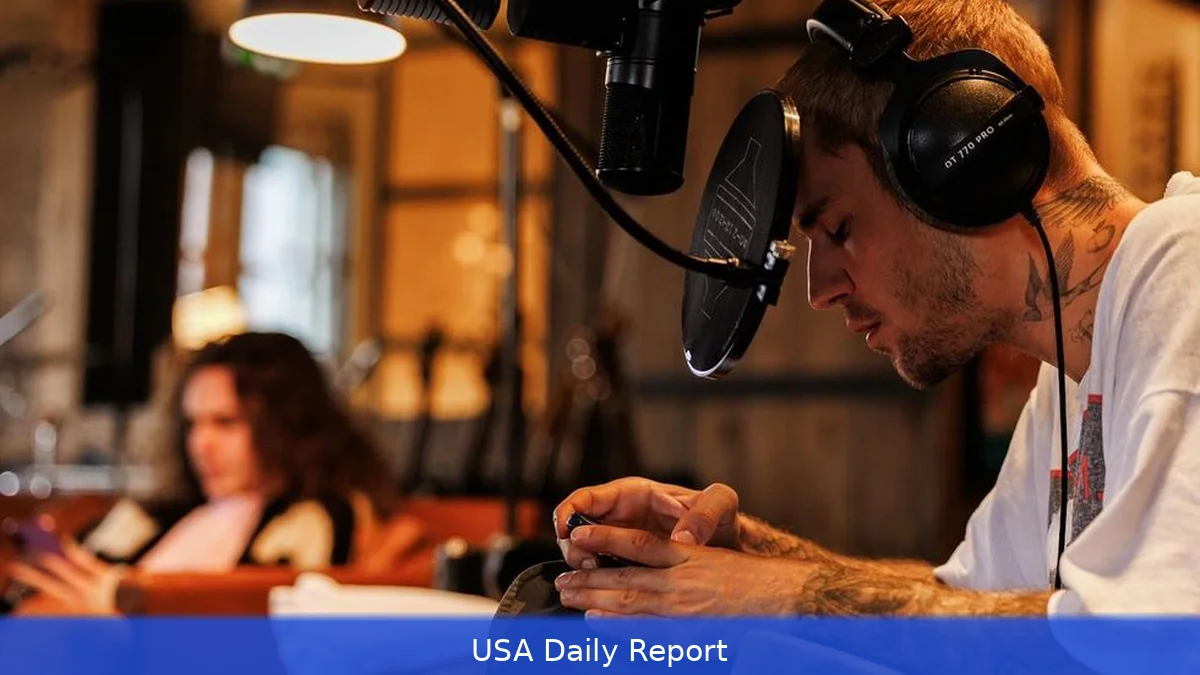
Justin Bieber sat behind a laptop for much of his Coachella headline set. Look, the crowd cheered as he cued up old videos and sang along. Thing is, the moment read like a deliberate tribute to the platform that discovered him.
On stage: a simple setup, a loud reaction
The 32-year-old spent Saturday night singing along to YouTube clips of his earlier hits.
Fans roared when familiar choruses — tracks that helped define late-2000s pop — filled the festival grounds.
It wasn't a high-tech spectacle with pyrotechnics and dancers. Instead, Bieber leaned into a pared-back approach: a laptop, a setlist of hits and the crowd doing the rest.
Why the choice landed with so many
What happened onstage had many layers. Nostalgia really hits home in pop culture. Artists use it to reconnect with old fans and show new ones where their hits started. Second, YouTube isn't merely a streaming channel anymore — it functioned as a discovery engine for a generation of performers, Bieber included. And that history made the laptop more than a prop — it was a small stage for a very public origin story.
This goes beyond just applause. Bieber’s gesture linked him back to a U.S.-born tech platform, showing how internet distribution and mainstream broadcasting work together. For artists and labels, that interplay is part of how songs build lasting value: streams, radio spins, licensing and the occasional headline-making festival slot combine into careers that keep generating revenue long after a single's release.
Economic ripple effects for festivals and partners
Big-name headliners boost ticket sales, sponsorships, and media buzz. Coachella is no different. When a major act alters the usual spectacle formula and still draws massive engagement, brands and promoters take notice. They see a proof point that audiences will turn up for emotional, memory-driven experiences as much as for new technology or spectacle.
That has practical consequences. Promoters can justify premium pricing for headline acts. Sponsors who want a cultural moment tied to a trusted older hit might bid higher for activations. Local businesses around festival venues benefit from hotel bookings, dining and retail tied to big crowds. Even streaming platforms and record labels watch these moments for spikes in catalog plays that can affect advertising and subscription revenue.
Cultural and political angles
Moments like this also add to America's cultural influence worldwide. U.S.-born entertainment platforms and festivals export cultural tastes globally. A headline-making performance at a major American festival helps keep those platforms central to international music conversations. That's an economic and diplomatic asset — cultural export supports industries and shapes perceptions of American cultural leadership.
At home, moments like Bieber's set feed debates about how older music catalogs are monetized in a streaming era. Lawmakers and regulators have been asking whether current rules around royalties, platform responsibilities and artist compensation reflect today's business models. When legacy hits get renewed attention and streaming numbers tick up, it can influence those conversations about how artists get paid and how platforms profit from discovery.
What it signals for artists and the industry
Artists and their teams watch big festivals closely for ideas. A stripped-back, nostalgia-heavy headlining set that still sells out suggests that touring strategies don't always need ever-larger staging budgets to succeed. Labels might push catalog promotion harder, especially around festival season, to capitalize on audience memory. Playlists, reissues and anniversary campaigns often follow the renewed attention such shows bring.
Live promoters also study audience behavior. If fans respond to a laptop-driven trip down memory lane, festivals might program more legacy acts in high-profile slots to capture cross-generational audiences. That can shape booking calendars from one coast to the other, and change how tours are marketed around festival appearances.
Streaming platforms and legacy content
When Bieber used YouTube videos onstage, it was like an unspoken thumbs-up for the platform. Platforms measure value in attention, and attention translates into ad views, subscriber retention and negotiating clout with labels. When a superstar points fans back to YouTube for a communal moment, it energizes the archive: older clips see more plays, comment sections light up, and algorithms take note. That can send royalties back to rights holders, though exact payouts vary and depend on complex licensing agreements.
For the music business, moments like this help validate strategies that lean on back catalogs. Catalog earnings have become a bigger slice of the revenue pie for many artists and rights holders. Renewed interest driven by a festival highlight helps keep older tracks economically relevant, supporting licensing deals for film, TV and advertising where nostalgia is often a selling point.
Audience response and fan economy
Honestly, the set connected with fans in real ways — through attendance, merch buying, and social media sharing. Fans documented the night across platforms, amplifying the moment beyond those physically present. That amplification creates downstream economic value: more streams, more merch clicks, more demand for related appearances.
For younger fans who discovered Bieber via playlists or TikTok clips, the performance offered a live tutorial: these songs once ruled charts and shaped teen fandom. For longtime listeners, it was a direct line back to a formative era. Either way, the interaction with archived video content highlighted the hybrid nature of modern fandom — part online, part live, and increasingly intertwined.
Broader takeaway
The headline set was a reminder: old songs still move people. A laptop and a few YouTube videos can become a communal experience when a global star leans into memory. Festivals will take notes. Brands and platforms will too. And fans will keep deciding what matters by where they spend their time and money.
Related Articles
- Asha Bhosle, Bollywood’s iconic voice, dies at 92
- Tehran’s markets stir after ceasefire, but shoppers and livelihoods lag behind
- Islamabad talks fail after 21 hours — ceasefire on shaky ground as US, Iran trade blame
The 32-year-old spent much of Saturday night's gig sitting in front of a laptop and singing to YouTube music videos of his older hits, such as "Baby" and "Never Say Never."


