
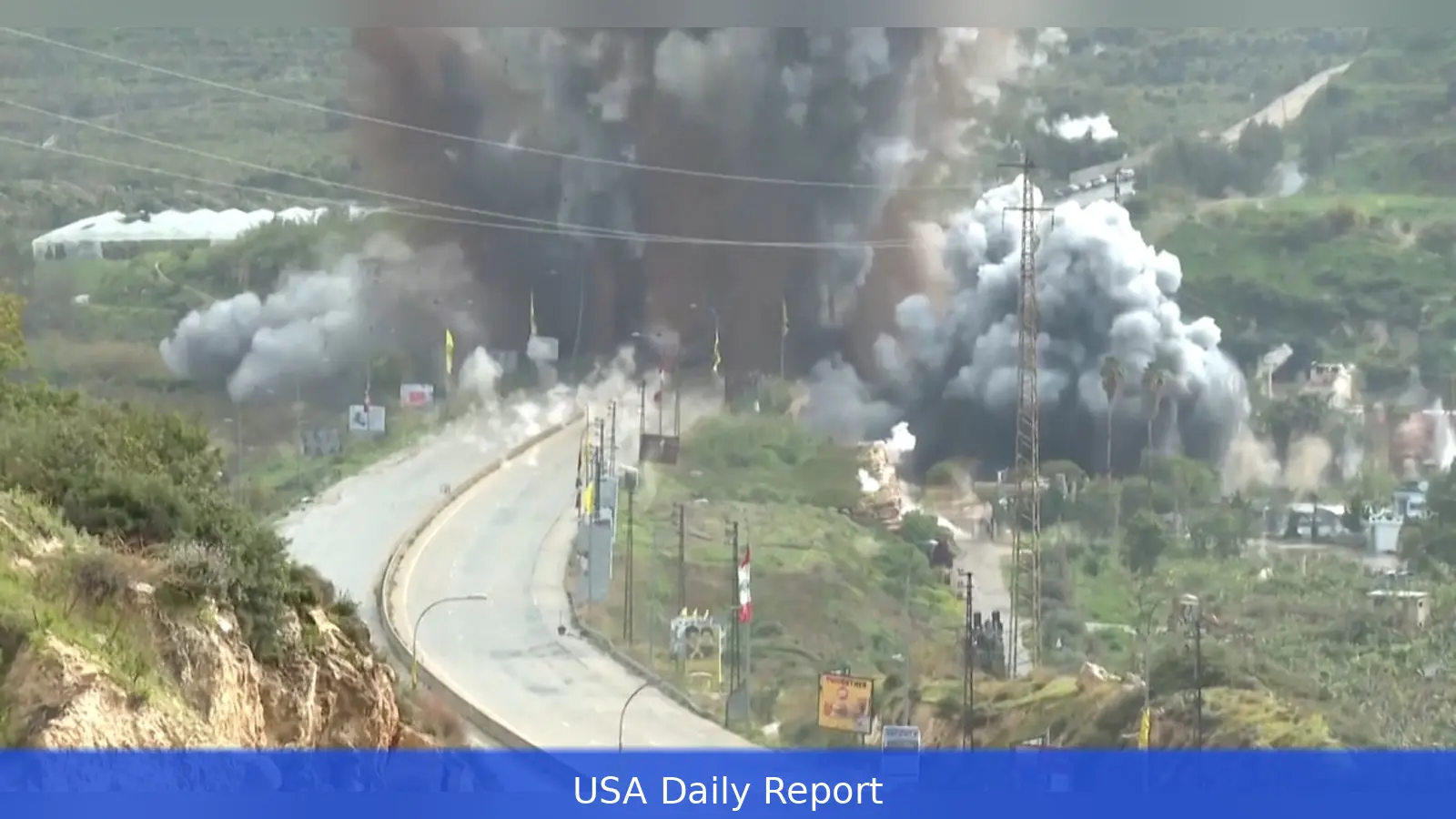
The last working bridge over Lebanon’s Litani River was destroyed. The strike severed major routes linking the country’s south to the rest of Lebanon.
Immediate impact on transport and aid
The strike hit a vital crossing near Tyre, cutting the primary land corridor for dozens of towns and villages south of the Litani. Road users say detours are longer, slower and often unpaved. Emergency vehicles and aid convoys now face extended travel times and more complicated routing.
This change really affects people living there.
Before the attack, the bridge served as one of the few places where large trucks, ambulances and buses could cross the Litani without taking lengthy detours. With the span out of service, local authorities and relief groups must reroute supplies through narrower roads and smaller bridges that can’t handle heavy loads. That limits the volume of fuel, food and medical equipment that can reach southern communities, and it raises costs for private commerce that already struggles under conflict conditions.
Local markets and farmers are likely to feel the effect fast. Many agricultural producers in the south use the route to send goods north and to ports. Delays and higher transport costs will reduce exports and household incomes, and could push up prices in towns that now face a more expensive supply chain.
Infrastructure under attack
The strike was part of a wider pattern of targeting infrastructure in southern Lebanon. Bridges, roads and other crossings have been damaged in recent weeks, and the loss of this final Litani crossing marks a new threshold. Repairing a major bridge isn't a matter of days: it requires engineering surveys, security guarantees for crews and access to heavy equipment.
That combination — technical need plus security risk — means reconstruction could be delayed for weeks or months. And when repairs do begin, they’ll be costlier and take longer than routine maintenance. The result is prolonged disruption for civilians who rely on steady transport links for work, schooling and healthcare.
Physical damage is just one part of the problem. The broader consequence is a fracturing of civil and economic life in southern Lebanon. Isolated towns may see declining services and reduced staffing for hospitals and clinics. Businesses could shutter or move, and unemployment will likely rise in the affected areas.
Engineers can’t start repairs quickly without safe access and clear leadership, which is tough while fighting goes on.
Political stakes and regional dynamics
The destruction of the bridge raises political risks inside Lebanon and beyond. Southern Lebanon is a complex patchwork of municipalities, armed groups and national authorities; when basic infrastructure is taken offline, local governance frays and alternative actors step in to fill gaps. That can deepen polarization and harden attitudes among residents and political leaders.
Internationally, attacks on civilian infrastructure draw diplomatic attention and complicate efforts to de-escalate. Governments that support humanitarian relief will face harder choices about where to focus scarce resources — and whether to offer engineering or reconstruction assistance while the security situation remains volatile.
This strike could change how governments watching the Israel-Lebanon situation think about next steps. Any escalation that widens the conflict would present a test for regional diplomacy and for those trying to keep maritime routes and energy supplies stable in the eastern Mediterranean.

Both sides understand that infrastructure serves military and civilian needs; hitting a crossing slows enemies but also hurts everyday people.
Humanitarian consequences and civilian life
Aid groups need reliable routes to get help where it’s needed. With the main Litani crossing gone, logistics planners must reconfigure supply chains and find new routes that are often less safe or less reliable. That means fewer deliveries or smaller shipments over the same time period.
Healthcare is especially vulnerable to transport disruption. Patients needing specialized treatment in larger hospitals north of the Litani could face longer journeys. Ambulance times will increase and transfer windows could close in medical emergencies.
Schools, too, are affected. Commuting students and teachers from villages on one side of the river now face longer trips or school closures if safe passage can’t be guaranteed. And families who relied on seasonal migration for work may see incomes dry up.
Humanitarian staff told reporters that moving food and fuel has become slower and more expensive. Those operational limits may reduce the reach of relief programs at a time when needs are rising across the country.
Economic implications beyond Lebanon
Trouble in southern Lebanon’s economy will affect neighboring areas too. Trade bottlenecks and rising transport costs reduce the competitiveness of local goods on regional markets. That hurts farmers, traders and trucking companies — and it chips away at tax revenues for municipal and national budgets.
Foreign donors and international finance institutions watching the situation may face pressure to reallocate funds toward emergency repairs and humanitarian relief, delaying longer-term development projects. That tradeoff carries economic costs: loans and grants aimed at infrastructure modernization or economic reform might be paused while immediate needs take priority.
For neighboring countries and firms that do business across borders, the extra friction raises transaction costs and injects uncertainty into commercial planning. Shipping firms and regional traders always price in risk; when ground transport becomes unpredictable, those costs rise.
All told, the strike tightens an already fragile fiscal picture for Lebanon and raises the near-term price of moving goods and people in the south.
What it means for U.S. Interests
U.S. Officials watch the Israel-Lebanon front for several reasons: the safety of U.S. Citizens in the region, risks to humanitarian access, and broader stability in a volatile neighborhood. Disruption to key crossings like the Litani route complicates U.S. Support efforts, including assistance delivered through nongovernmental partners.
Military planners tracking force posture and contingency options also factor in infrastructure damage when assessing scenarios for escalation or evacuation. Longer transit times for aid and personnel make contingency operations more complex and costly.
In addition, diplomatic channels that aim to limit escalation may face heightened urgency. When civilian infrastructure is hit, pressure grows on mediators and on capitals that influence combatants to push for restraints. Washington may find itself engaging more intensively with allies in the region to coordinate humanitarian corridors and reconstruction assistance.
Finally, the broader impact on regional trade and investor confidence can affect economic ties with the U.S. Companies doing business in Lebanon or the eastern Mediterranean prefer predictability; repeated shocks to basic infrastructure reduce appetite for new investment and complicate existing projects.
Repair prospects and next steps
Rebuilding a major bridge requires a stable ceasefire or at least temporary security guarantees for engineers and contractors. It also requires heavy machinery and materials that may be hard to move into contested areas. Political negotiations will likely determine who funds and oversees repairs — and whether reconstruction can be protected from further attack.
Soon, municipal authorities and relief agencies will focus on temporary fixes: shoring up smaller crossings, improving detours and staging more localized distribution points for aid. But those stopgaps don’t replace a major bridge for heavy transport.
The political calculus will matter. If parties to the conflict see value in allowing reconstruction, work could begin sooner rather than later. If not, communities will face prolonged isolation and higher costs.
Obaida Hitto, an Al Jazeera correspondent reporting from Tyre, said the bridge’s destruction has effectively cut off major routes linking parts of the south to the rest of Lebanon.
Related Articles
Al Jazeera correspondent Obaida Hitto reported from Tyre that the last operational bridge over the Litani River had been destroyed.
This article was created with AI assistance.


