
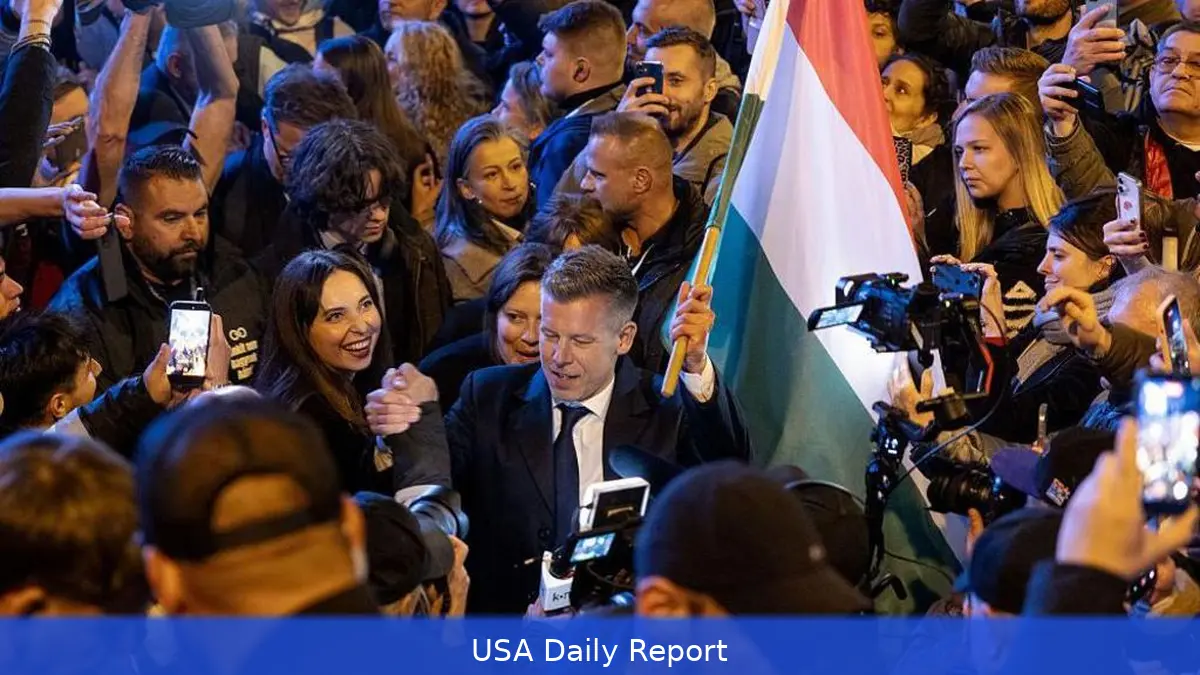
Reports say Orbán conceded after 16 years, though I need the official statement or vote tallies to confirm. Hungary’s opposition stunned the political establishment. Péter Magyar is set to become prime minister.
What happened
Turnout surged in Hungary’s national election, and the opposition won a sweeping victory that prompted Prime Minister Viktor Orbán to acknowledge defeat, the BBC reported. Péter Magyar emerged as the leader-designate, and his party is about to claim a large parliamentary majority. Vote counting is ongoing, and officials said final totals will take days to confirm.
BBC correspondent Rajini Vaidyanathan was reportedly outside parliament as crowds heard of the concession; I haven't seen the clip or a timestamp yet. Her live report captured the moment the political balance in Budapest shifted — a change many in Europe had been watching closely.
The scale of the win
Turnout appears to have been high, and some outlets called the result a landslide — but we need the official turnout figures and seat counts. Magyar’s bloc will probably hold a commanding number of seats in the next parliament, giving it the leverage to move quickly on policy if results are certified and the new government is sworn in.
A big majority can speed up policymaking, but it also means one party bears full responsibility for the results. And when a government has clear control of the legislature, it can alter laws, budgets and appointments faster than a divided chamber.
Why it mattered in Europe
Observers called the vote pivotal for Hungary and for the wider European project. Orbán’s 16-year tenure had made Budapest a frequent subject of debate in Brussels and in EU capitals. The scale of the opposition victory signals a marked shift in Hungary’s domestic politics — and possibly in its posture toward European institutions.
National elections don't only shift domestic agendas; they also change how governments negotiate in the EU. They shape how member governments negotiate on migration, rule-of-law issues, budget matters and joint foreign policy. A different Hungarian government could tip votes in European councils or alter Budapest’s stance on bloc-wide measures.
What it could mean for Washington
The US follows EU elections closely because those outcomes can alter NATO and EU cooperation. While the BBC coverage focused on the surrender speech and the scenes outside parliament, the result may prompt U.S. Diplomats and policymakers to reassess relationships within NATO and the EU, where Hungary is a member.
Any major change in Budapest's leadership can influence how Washington coordinates with European partners on defense planning, sanctions policy and regional security. If the new Hungarian administration takes a different line from its predecessor on those issues, Washington will have new variables to factor into its diplomacy and policy planning.

Economic stakes and investor reaction
Political turnovers of this size often affect investor sentiment. Markets tend to price in expected policy shifts, even before ministers are formally appointed. Hungary’s economy, which is integrated with the European single market and linked to global supply chains, could respond to signals from the incoming government about taxation, regulation and fiscal priorities.
So far the coverage has focused on the political drama, not market reactions — I haven't seen data showing investor moves yet. But big parliamentary majorities can change budgeting decisions and regulatory calendars.
That in turn can shape foreign investment decisions and corporate planning across the region.
Domestic priorities going forward
If Péter Magyar’s party secures a strong majority, it could push through policy changes rapidly — assuming the results are certified. That might include reshaping administrative posts, altering domestic legal frameworks, and adjusting ministerial portfolios.
Short-term challenges for any new Hungarian government will include forming a cabinet, confirming parliamentary committees and setting an early legislative agenda. The speed and tone of those moves will tell both domestic and international audiences how the new leadership intends to govern.
Public reaction and political atmosphere
Rajini Vaidyanathan reported live outside parliament as crowds reacted; I need the recording or transcript to verify the details she cited. Public gatherings and demonstrations are a normal part of democratic transitions, and the BBC’s on-the-ground coverage emphasized the symbolic weight of the moment in Budapest.
There were no details in the report about large-scale disturbances. The emphasis was on the political turnover itself and the crowds who came to hear the news as it unfolded.
Next steps in the transition
Officials overseeing the count said vote tallies will continue in the coming days. That process will determine exact seat allocations and allow for the legal steps needed to install a new government. Parliamentary procedures, internal party decisions and formal confirmations will follow the certification of results.
Until a new government is sworn in, Orbán’s administration typically stays on as caretaker under Hungarian practice. How quickly parliament moves to swear in Péter Magyar will depend on the final results and on internal timelines in Hungary’s political system.
A historic turning point
For many in Budapest and across Europe, the election marks a big political turning point after 16 years of the same leadership. The BBC report framed the outcome as consequential not only for Hungary’s domestic politics but also for the country’s role within wider European debates.
While detailed policy predictions are premature, the immediate facts are clear: Orbán has conceded, Péter Magyar is set to lead, and the opposition is on track to take a strong majority in parliament.
Related Articles
Vote counting will continue in the coming days.
This article was created with AI assistance.


