
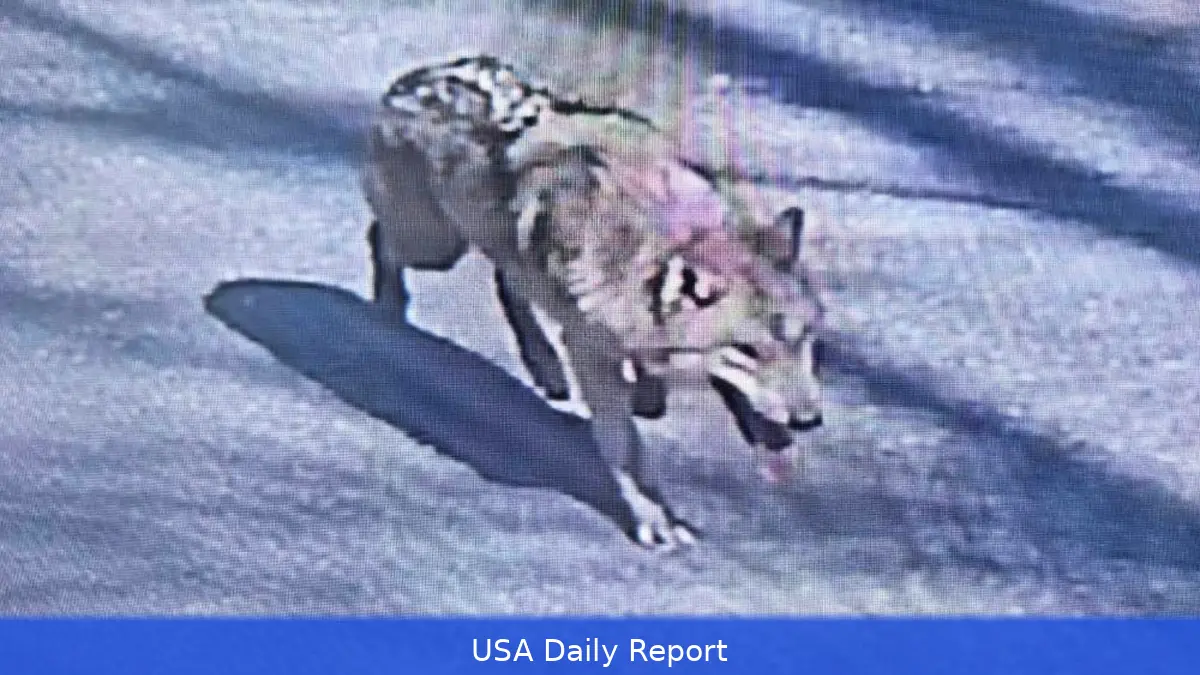
Neukgu disappeared several days ago, and searchers say they played recorded howls and circulated an AI-generated image to help spot the animal.
What happened
Neukgu, a wolf that escaped from a private facility in South Korea, has prompted a wide-ranging search that relied on unconventional tools: recordings of wolf howls and an artificial intelligence-generated image. The animal's disappearance quickly went viral on social media, driving large numbers of volunteers and officials to the area and intensifying scrutiny of the facility's management.
The hunt has stretched over several days. Search teams have combed nearby forests and roads, while park personnel and volunteers used lure techniques and sound recordings to try to coax the animal into view. Technicians produced an AI composite image to give volunteers and residents a clearer reference photo to use if they spotted the animal.
How those tools were used
Researchers have long used recorded calls to draw out territorial animals; playing a howl can sometimes make a wolf respond and give away its location. In this case, officials and volunteers played wolf howls at intervals in areas where the animal was most likely to be hiding. The idea was to trigger a vocal response, which could point searchers in the right direction.
Alongside sound, an AI-assembled image circulated widely. The AI rendering combined photographs and known features to produce a clearer, sharper picture of what Neukgu might look like after the escape. Organisers distributed that image across local messaging apps and posted it on community boards to help people identify the animal quickly.
Public reaction and community mobilisation
The case drew fast public attention: social posts, tip lines and local chats lit up within hours. Social platforms filled with sightings, tips and speculation. Hundreds of residents reported possible wolf movements; many people volunteered to join search parties or to place humane traps.
Civilians sent in a flood of tips, which helped and hindered the search — officials had to sort credible leads from noise.
Volunteer teams sometimes converged on the same locations as trained search crews, which forced coordinators to re-route efforts and assign liaisons to manage volunteers. Officials warned that uncoordinated action could stress the animal and reduce the chances of a safe capture. Still, the public engagement showed how quickly an animal escape can become a national story.
Concerns about the facility and past incidents
The escape reopened questions about how the facility is run and whether its structures meet safety standards. Critics highlighted structural weaknesses and management lapses at the location that housed Neukgu. Those concerns were amplified by memories of a prior incident involving a wolf named Porongi, who died following an earlier escape. That history made people worry that the current episode could repeat a tragic outcome.
Advocates for stronger oversight called for immediate inspections of private wildlife facilities and clearer rules on cage design, staffing and emergency response. Local authorities said they would review safety protocols and consider whether stricter licensing requirements or additional monitoring were needed.

Political pressure and regulatory fallout
The escape has landed on political doorsteps. Opposition lawmakers and local council members criticised regulators for what they described as lax oversight. Some elected officials demanded formal investigations into licensing practices and into why earlier recommendations after Porongi's case had not been fully implemented.
Government agencies said they were coordinating a response that included reviewing the facility's approvals and assessing whether penalties or revocations of permits were warranted. Local arguments have widened into a debate over animal-welfare rules and whether private facilities should house wild species at all.
Economic effects: parks, tourism and the cost of a search
There's an economic angle, too. The facility that lost Neukgu draws paying visitors; a temporary closure or reputational damage could hit ticket sales and local businesses that depend on weekend visitors. Nearby tourism operators have already reported cancellations and a dip in bookings while the search continues.
Authorities also face direct costs: overtime for park rangers, fees for specialised tracking teams, and the expense of deploying technology such as drones or thermal cameras. Those costs are usually borne by municipal budgets or the facility itself, but when a case becomes high-profile, central government help sometimes arrives — and that shifts the financial burden to taxpayers.
Technology, wildlife work and international interest
Wildlife researchers outside South Korea have been watching the response closely.
Using sound playbacks and AI images shows how relatively cheap tools can sometimes speed up a search in the field. Conservation groups say such techniques could be useful in other contexts — tracking lost pets, monitoring escaped zoo animals, or even locating endangered species for non-invasive monitoring.
That said, experts caution against over-relying on digital tools. AI images can mislead if based on incomplete data. And sound playbacks can stress animals if used improperly. So while the methods are intriguing, they're not a magic fix.
What it means for the US and global practice
For U.S. Managers of wildlife parks and private sanctuaries, the episode is a reminder to revisit safety protocols. Many U.S. Facilities follow national and state rules for enclosures and emergency response, but private collections can vary widely in oversight. American institutions often exchange best practices internationally; the lessons from Neukgu's escape may feed into that dialogue.
Beyond parks, technology firms and academic labs in the U.S. That develop AI tools for image synthesis and acoustic analysis may find new demand for products tailored to wildlife response. Nonprofits that fund conservation tech are already interested in partnerships that can adapt these tools while minimising risks to animals.
Practical next steps and ongoing risks
Search leaders emphasised a few clear priorities: mapping recent confirmed sightings, centralising tip lines to avoid duplicate efforts, and briefing local communities on safe behaviour if they encounter the animal. Humane capture remains the stated goal, with traps and sedation only to be used by trained personnel.
Yet the clock is a factor. Wild animals displaced from enclosure conditions can stray into populated areas, cross roads and become stressed. The longer a search continues, the more complex capture becomes — especially if volunteers and the public inadvertently alter the animal's movement pattern.
Where this leaves the facility and policy discussions
Facility operators face investigations, potential fines and reputational damage. The episode has prompted renewed calls for clear national standards on the design and management of private wildlife holdings. That conversation will likely include enforcement mechanisms, minimum staffing levels, and standards for emergency drills and public notifications.
At the same time, conservationists want resources for humane response and for boosting local capacity to handle escapes without putting people or animals at risk. The case shows that community interest is strong — but systems need to channel that energy safely and usefully.
Related Articles
A previous wolf, Porongi, died after an earlier escape — a fact that has amplified calls for stricter oversight.
This article was created with AI assistance.


