
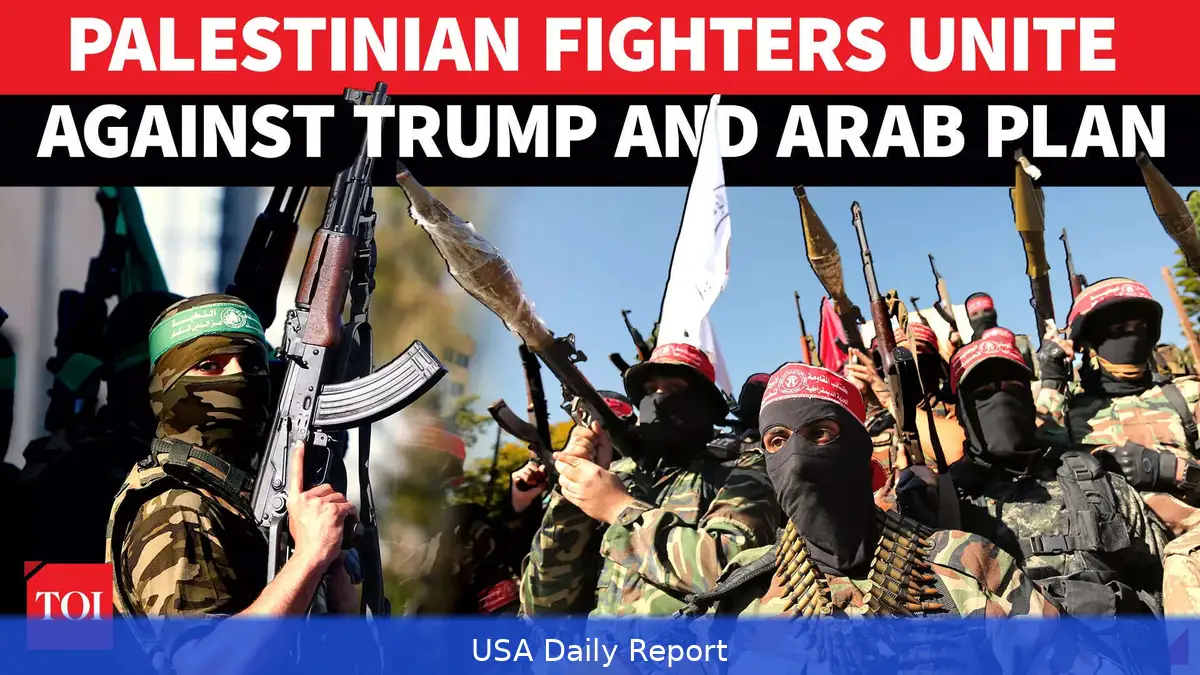
Hamas has rejected a U.S.-backed plan to disarm Gaza. The move complicates a scheme Washington calls phase two of a broader peace blueprint.
What happened
Reports say Hamas refused to hand over weapons under the proposed two-step plan, blocking the disarmament step announced in mid-January. The rejection follows an announcement in mid-January that the United States had moved into the second phase of the blueprint, a step meant to lead toward a permanent halt to hostilities after Gaza's demilitarization and a complete Israeli withdrawal.
Steve Witkoff, the U.S. Middle East envoy, announced the start of phase two. He said the effort was to build on initial arrangements intended to reduce violence and open channels for longer-term arrangements. Palestinian officials in Gaza and the West Bank reportedly pushed back against demilitarization, calling it unacceptable.
The resulting deadlock has stalled diplomatic momentum. Negotiators had framed phase two as the bridge from a temporary ceasefire and humanitarian pauses to an enduring settlement — a path that depended on the armed groups handing over or disabling their weapons and Israel pulling forces back to allow civilian life to resume across Gaza. With Hamas declining that element, the diplomats' timeline is in question.
U.S. officials framed phase two as following phase one and linking Gaza's demilitarization to an Israeli troop withdrawal. But Hamas's rejection means what was described as the linchpin of the plan isn't in place. That leaves Israeli demands and Palestinian resistance head-on, with Washington trying to keep the process from unravelling.
Why it matters
Rejection of demilitarization has political consequences inside the United States and abroad. For the Biden administration, or for any U.S. Administration engaged in the region, the viability of a stepwise plan depends on both sides accepting compromises that most voters view as painful — especially a move to remove armed groups' capabilities while ensuring Israel's security concerns are met.
When a publicly announced phase stalls quickly, it damages U.S. credibility on Middle East peacemaking. Washington had framed phase two as the moment when temporary arrangements would be converted into lasting terms. Now officials in Washington face pressure from lawmakers, humanitarian organizations, and regional partners to explain the strategy for protecting civilians and securing long-term stability without the demilitarization element.
At home, the issue could become a partisan flashpoint. Lawmakers who prioritize Israel's security will press for firm guarantees and may oppose any U.S. Pressure on Israel to withdraw forces absent clear Palestinian commitments on weapons. Conversely, members of Congress concerned about civilian suffering or Gaza reconstruction funding may demand renewed diplomatic pushes or new leverage to secure humanitarian access.

Regional and international fallout
The plan's stall matters to regional players who have pushed for an orderly end to the war. Neighbouring governments that helped broker initial arrangements now face the prospect of renewed instability spilling across borders. Arab capitals that backed diplomatic efforts may find their influence diminished if talks fail to produce a tangible pathway to normalcy.
Gaza's future governance and security arrangements aren't purely local issues. Regional security dynamics — from maritime routes to cross-border trade — can be affected by persisting conflict. Economies already fragile in the eastern Mediterranean and the Levant suffer when uncertainty keeps reconstruction money, trade and private investment at bay. That makes a diplomatic breakthrough not just a political aim but an economic one as well.
Economic implications for the United States
The immediate U.S. economic exposure is largely in humanitarian aid and potential reconstruction funding. Washington is a major provider of humanitarian assistance to Gaza and neighboring refugee-hosting states. If phase two's goals falter, Congress could be forced into difficult votes over emergency aid packages, reconstruction funds and oversight conditions tied to how money is used.
Markets may not react strongly to a single diplomatic setback, but prolonged conflict can push up regional insurance costs, raise shipping premiums through nearby corridors, and create volatility in energy markets. The U.S. Economy isn't isolated from those ripples. Investors watch geopolitical risk, and persistent instability in a key region can nudge risk premiums in ways that complicate planning for multinational firms with investments across the Middle East.
Beyond aid, U.S. Defense and security cooperation with regional partners could shift. Military sales or logistics cooperation tied to regional stability might be accelerated by allied governments seeking to buttress deterrence, or conversely, they could be paused while policymakers reassess the diplomatic path forward.
Political questions Washington faces
Now U.S. policymakers must decide whether to drop demilitarization as a precondition or negotiate verification steps both sides can accept. Steve Witkoff and other U.S. Envoys will likely continue shuttle diplomacy aimed at keeping the negotiating table open, but the contours of a compromised second phase are unclear.
Some in Washington argue for stronger monitoring and phased, verifiable steps that reduce arms while increasing international presence to guarantee security. Others counter that any plan that doesn't require full demilitarization is unlikely to satisfy Israeli public opinion and political leaders, who view armed groups' capabilities as an existential threat.
That tug-of-war feeds into U.S. Domestic politics. Congressional oversight of any future funding will be intense. Lawmakers across the aisle have different red lines about Israel's security and Palestinian rights. Those divisions make it harder for the White House to present a united domestic front while it negotiates abroad.
Where things stand now
Diplomacy is in limbo. The second phase was announced in mid-January by Steve Witkoff, the U.S. Middle East envoy, but the essential demand that armed groups in Gaza disarm has been rejected by Hamas, according to Palestinian officials. Without acceptance of that demand, the plan's core mechanism for trading Israeli withdrawal for security guarantees doesn't exist.
Still, officials in Washington and allied capitals continue to discuss options for salvage. Any next steps will require creative verification arrangements, clear benchmarks and likely, multi-party guarantees. Whether those elements can replace the demilitarization demand — and whether Israel and Hamas will accept them — remains an open question.
For now, the halt in talks shows how fragile negotiated roadmaps can be when one side rejects a central term and the other insists on it as essential to its security.
Related Articles
- 86-Year-Old French Woman Detained by ICE After Moving to U.S. to Reunite with Long-Lost Love
- Iran Protests YouTube Suspension of Popular Lego‑style AI Channel After Video Mocking Trump
Phase two of the U.S.-backed blueprint was announced in mid-January by U.S. Middle East envoy Steve Witkoff; Hamas has rejected the plan's demand for Gaza demilitarization.
This article was created with AI assistance.


