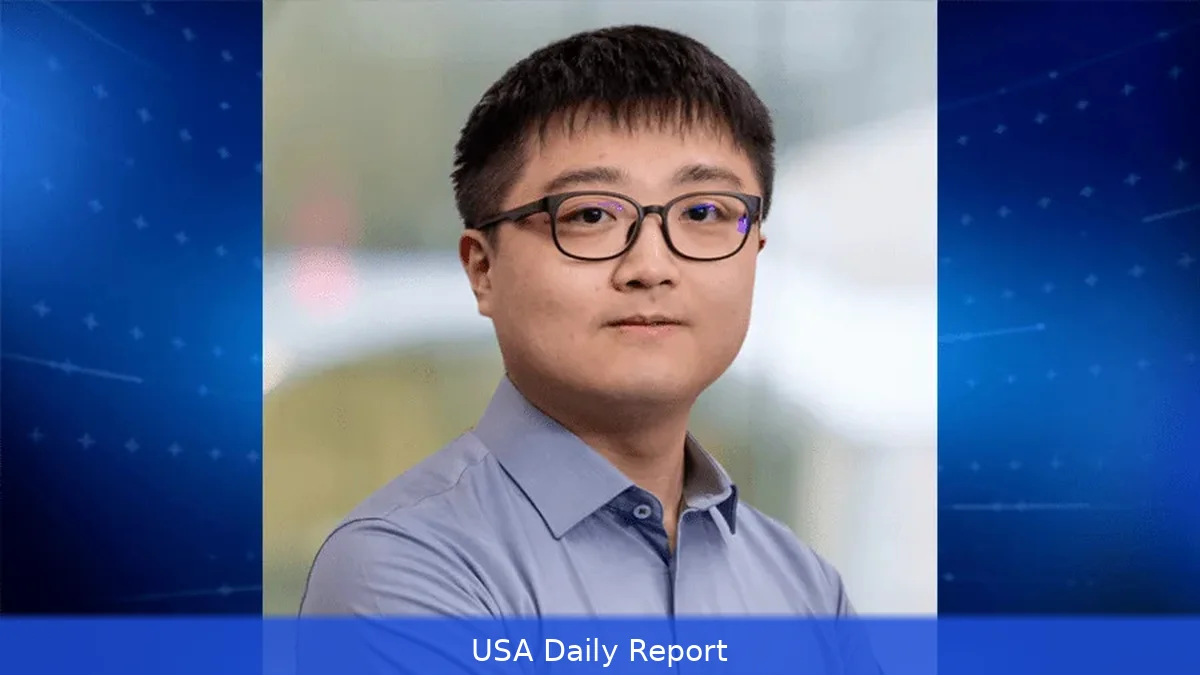
China has pressed U.S. Authorities for answers after a researcher was found dead on a Michigan campus. Beijing says it’s deeply distressed and wants a full investigation.
What happened and when
The body of a Chinese researcher was discovered inside the University of Michigan’s George G. Brown Building after what the university described as a fall from a big height, school officials said. Emergency responders answered a report at about 11 p.m. Eastern on March 19, the university said in a brief statement. The university added that the incident is being examined as a "possible act of self-harm," and that it couldn't provide additional details at this time.
Look, the campus detail matters — the building houses engineering research and is at the center of the university’s electrical and computer engineering programs.
Beijing’s response
Chinese officials have publicly urged U.S. Authorities to investigate. Liu Pengyu, a spokesperson for the Chinese Embassy in the United States, told NBC News that officials were "deeply distressed by this tragedy" and that the embassy had "established contact with the victim’s family immediately" to offer assistance.
The foreign ministry in Beijing has also weighed in. Lin Jian, a spokesperson for China’s Foreign Ministry, told reporters on March 27 that the U.S. Must stop what he described as "discriminatory law enforcement action" that can lead to Chinese students and scholars facing "unwarranted questioning" and "harassment."
And Mao Ning, another foreign ministry spokesperson, said Beijing would "continue to take necessary measures to firmly safeguard the legitimate rights and interests of Chinese citizens."
Who the researcher was
Neither the university nor Chinese authorities publicly named the researcher in their official statements. But the South China Morning Post of Hong Kong reported that the man was Wang Danhao, describing him as a Chinese semiconductor researcher and citing a Chinese embassy spokesperson in Washington for the identification.
According to the University of Michigan’s website, the person who worked in the Department of Electrical and Computer Engineering held the title of assistant research scientist and listed interdisciplinary electrical engineering among his research interests.
Diplomatic and political fallout
Thing is, the public response from Beijing makes this more than a campus tragedy. Chinese officials lodging "solemn representations" with U.S. Government agencies and universities signals a formal diplomatic step, not just routine consular care. Liu Pengyu said the embassy had repeatedly made representations to "relevant U.S. Government agencies and universities regarding this case."
That choice of language — "solemn representations" — is used in diplomacy to register strong concern. It suggests Beijing expects answers and accountability beyond what families typically seek after an unexplained death abroad.
Right now, U.S. Federal agencies contacted by NBC News — including the Department of Homeland Security, Immigration and Customs Enforcement and Michigan State Police — had not provided comment by the time of that report. The silence from those agencies only feeds the diplomatic tension sparked by Beijing’s statements.
Why the case resonates in China
The South China Morning Post and officials in Beijing suggest the case taps into broader anxieties among Chinese students and scholars in the United States. Reports in Chinese media and repeated public statements by Beijing have framed the incident as reinforcing perceptions that Chinese nationals in the U.S. Can face intensified scrutiny from law enforcement.
That perception matters. Chinese students make up a large share of international researchers and graduate students at U.S. Universities, and their safety and treatment overseas are repeatedly flagged in Beijing’s diplomatic messaging. When an incident like this becomes widely reported in Chinese media, it can shape public opinion and harden official responses.
Connections to research areas and national concerns
Reports that the researcher worked in semiconductor-related fields add another layer of sensitivity. Semiconductor technology has become a focus of strategic competition between the United States and China, and scholars working in those areas are often subject to closer scrutiny. The South China Morning Post described the researcher as a semiconductor specialist, and the university listing ties him to electrical and computer engineering work.
That combination — a researcher in a high-tech field, an unexplained death, and immediate public pressure from Beijing — makes the case politically sensitive in both capitals.
Campus and consular actions
The University of Michigan said it launched an investigation and characterized the incident in narrowly factual terms. The university statement didn't identify the researcher or link the death to external actions by law enforcement. It also didn't give a timetable for findings or name investigators handling the case.
Meanwhile, the Chinese Embassy has indicated it has been in contact with the family and has provided assistance. Liu Pengyu said consular staff "established contact with the victim’s family immediately," signaling the embassy’s early involvement.
What officials are asking for
Beijing has called for a "thorough investigation" and what Lin Jian labeled a "responsible explanation" to the victim’s family and to China. Those demands leave room for follow-up steps that could include requests for detailed investigative reports, consular access to records or direct talks between officials, though Beijing hasn't laid out public demands beyond pressuring for accountability.
To be clear: Chinese spokespeople stopped short of explicitly blaming U.S. Law enforcement for causing the death, though their statements suggested concern that aggressive or discriminatory policing could be a factor. Lin Jian urged the United States to stop actions that lead to "unwarranted questioning" and "harassment."
Broader implications and next moves
The immediate consequence is diplomatic tension. Beijing’s early, public demands and the embassy’s swift contact with the family have turned a campus incident into a bilateral issue. University officials, U.S. Law enforcement and Chinese diplomats now occupy intersecting roles in the same case — and that intersection is politically charged.
Longer-term effects will depend on what investigators find and on how transparent U.S. Authorities are with both the family and China. If U.S. Agencies provide detailed, credible information and cooperate with consular requests, that may soothe some tensions. If not, Beijing could take further public steps to press the matter.
Still, at this stage the facts are limited to the university’s account, Beijing’s calls for investigation, and media reporting that identifies the researcher as Wang Danhao. U.S. Federal agencies had not offered comment to NBC News when the story was published, leaving questions about law enforcement involvement unanswered.
Hang on though — how those questions get answered will shape whether this remains a bilateral provocation or is resolved as a tragic but isolated incident on an American campus.
Related Articles
- What Is ‘Soft Power’ and Why Does It Matter More Than Ever in the Trump Era?
- Finance Titans Bet Gulf Resilience Will Outweigh War Fallout
- Eight Million Kilos of Tea Pile Up in Mombasa as Iran War Disrupts Shipping
Liu Pengyu, a spokesperson for the Chinese Embassy in the U.S., said officials were "deeply distressed by this tragedy" and had "established contact with the victim’s family immediately."


