
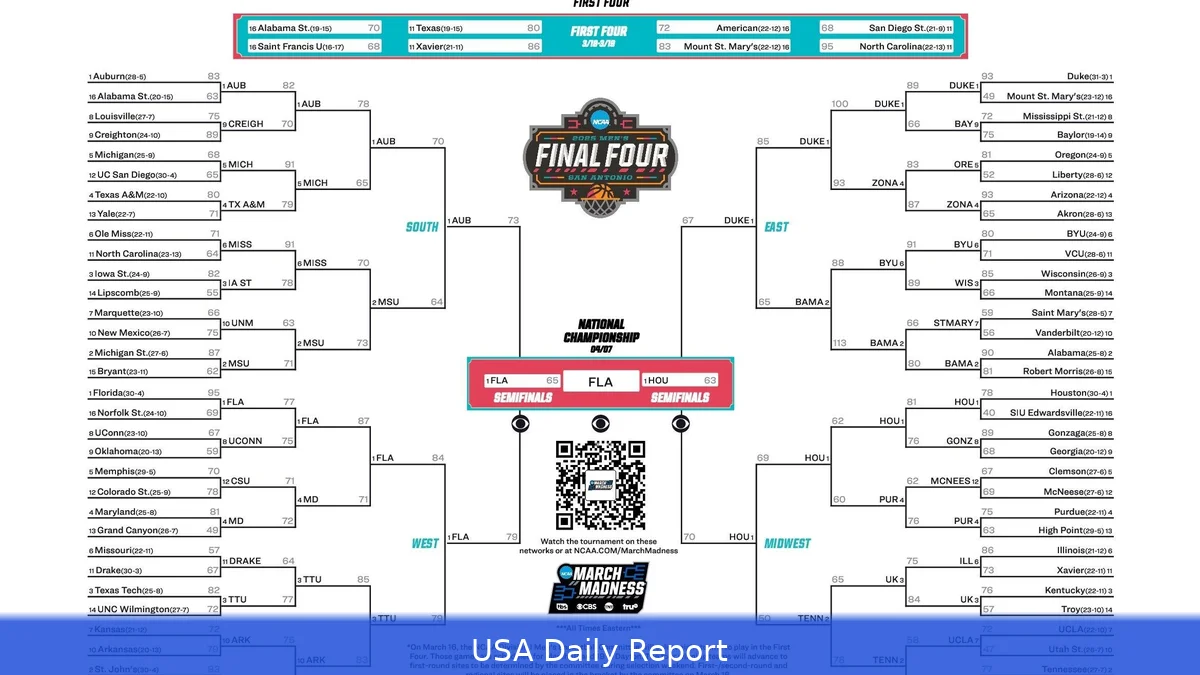
Every spring, March Madness takes over the country with buzzer-beaters, upsets, and moments fans won't forget. But behind the thrilling games lies a complex system that shapes the tournament’s drama: the NCAA tournament bracket, the seeding, and the selection process. If you know how teams are picked and placed, you might enjoy the tournament more and even make better bracket picks. Here’s a straightforward look at March Madness, explaining who gets invited and how the bracket works without confusing jargon. Whether you’re a casual fan or a die-hard college hoops follower, you’ll walk away with a clear, detailed picture of what makes the NCAA tournament tick.
The Structure of the NCAA Tournament: A 68-Team Puzzle
March Madness isn’t just a catchy nickname. It’s a sprawling, single-elimination tournament that crowns college basketball’s national champion. The tournament expands each spring to include 68 teams, representing schools from Division I conferences across the country. But it didn’t start this big. Over decades, the field grew from just eight teams to today’s 68, reflecting college basketball’s explosion in popularity and competitiveness.
The tournament’s 68 teams consist of two groups: automatic qualifiers and at-large bids. Automatic qualifiers are teams that win their conference tournaments—31 in total—earning a guaranteed spot. The remaining 37 slots go to at-large teams, selected by a committee based on season performance, strength of schedule, and other factors. This mix ensures every conference has representation, while still rewarding teams that excel in tough competition.
Once the field is set, the tournament kicks off with the "First Four"—four play-in games involving eight teams battling for the last spots in the main 64-team bracket. This round adds extra drama and gives bubble teams a shot to prove they belong.
From there, the bracket unfolds in four regions, each containing 16 seeded teams. The single-elimination format means one loss and a team’s dream ends—fueling the high stakes and frantic energy that define March Madness.
Knowing this structure makes it clear why every selection, seed, and matchup counts. It’s not just about filling slots—it’s about balancing fairness, competition, and excitement across a massive, national tournament.
Selection Sunday: How Teams Earn Their Spot
Selection Sunday is the NCAA tournament’s annual cliffhanger. Fans, players, and coaches gather to learn who made the cut and where they’ll play.
But how exactly does the selection process work?
The NCAA Selection Committee, made up of athletic directors and conference commissioners, handles this tough job. They sift through mountains of data, watch games, and debate to finalize the 68-team field. The committee’s goal is to identify the best teams and rank them fairly, balancing objective metrics with subjective judgment.
The main factors are a team’s win-loss record, strength of schedule, quality wins, and how they’ve played lately. The committee also considers injuries or other circumstances that may impact a team’s potential. Tools like the NCAA Evaluation Tool (NET) rankings, which measure game results and opponent quality, guide their decisions but don’t dictate them.
Bubble teams—those on the edge of being selected—face the most scrutiny. Just a few wins or losses can swing their inclusion.
That uncertainty brings a frenzy among fans and analysts who try to predict who gets in or left out. At the end of the day, the committee aims to reward teams that performed well in the regular season and conference tournaments, ensuring the tournament features the most competitive field possible.
Once the field is set, seeds are assigned, shaping the bracket’s matchups and path to the championship.

Seeding Explained: Ranking Teams for Balanced Competition
Seeding is the process of ranking teams from 1 to 16 within each of the four regions. This ranking decides who plays who and sets the tournament’s competitive tone. The goal: balance the bracket so top teams face lower-ranked opponents early, preventing early clashes between favorites.
The top seed in each region is considered the strongest team, while the 16th seed is viewed as the underdog. The committee places teams to create a logical, fair progression, matching 1 vs. 16, 2 vs. 15, 3 vs. 14, and so on. This structure rewards higher seeds with theoretically easier first-round games but also sets the stage for classic upsets.
Seeding isn’t only about ranking teams; where they’re from and their conferences also play a role. The committee tries to avoid early matchups between teams from the same conference and often assigns teams to regions close to their campuses when possible. But competitive balance takes priority.
Seeding often sparks debate since teams can feel they’re ranked too high or too low, which affects how fans and players see them. Still, seeding forms the bracket’s core and sets up the matchups that make March Madness so unpredictable.
Understanding seeding helps fans analyze the tournament’s dynamics and spot potential Cinderella stories—lower seeds poised to upset higher-ranked teams.
Bracketology: Filling Out and Following the Tournament Bracket
The tournament bracket is the visual map of March Madness’s journey. Fans everywhere fill out brackets, predicting winners in each matchup through to the championship. But the bracket isn’t just a game; it’s a complex design reflecting the seeds, regions, and game locations.
After Selection Sunday, the official bracket is revealed. It lays out all matchups, showing which seeds face off and the path each team would take to reach the Final Four and beyond.
The bracket divides into four regions—East, West, South, and Midwest—each with 16 teams seeded accordingly. The tournament progresses through rounds: First Round, Second Round, Sweet Sixteen, Elite Eight, Final Four, and the National Championship.
Bracketology, the art and science of predicting the tournament, has become a cultural phenomenon. Experts and amateurs analyze matchups based on seeding, playing styles, injuries, and historical trends. While the bracket structure is fixed, the results are wildly unpredictable, making bracket pools a staple of March Madness fun.
Knowing how the bracket works can improve your picks. For example, understanding potential matchups lets you identify dangerous lower seeds or vulnerable favorites. It also helps in tracking teams’ possible travel distances and rest days, factors that can impact performance.
Whether for fun or fantasy, mastering the bracket’s layout and logic makes the madness more thrilling.
Edge Cases and Controversies: When the Selection Process Gets Messy
No system is perfect, and the NCAA tournament’s selection and seeding process sometimes sparks debate. Teams on the bubble may feel snubbed, while others question seed fairness. Controversies arise over perceived biases or inconsistencies.
One challenge lies in comparing teams from different conferences with varying competition levels. A 20-win team from a major conference might be viewed differently than a dominant mid-major champion. The committee weighs these factors but can’t eliminate subjective judgment, leading to disputes.
Another issue is the "play-in" First Four games. Some argue that automatic qualifiers from smaller conferences shouldn’t have to play extra games, while others see it as a fair way to trim the field. These games add excitement but also complexity to the tournament’s start.
Occasionally, external factors like injuries or player suspensions affect teams after selection, raising questions about fairness. The committee has limited ability to adjust once the bracket is set.
Still, the process strives for transparency. The NCAA releases selection criteria and explains decisions, helping fans understand the rationale. While no method will satisfy everyone, the system balances objectivity and flexibility to create a competitive, thrilling tournament.
Practical Tips for Fans: Getting the Most Out of March Madness
Knowing how the NCAA tournament works can boost your enjoyment and success in following March Madness. Here are some practical tips:
- Study the bracket early: Once it’s released, review matchups and potential paths for your favorite teams. Spot likely challenges and upset risks.
- Understand seeding implications: Higher seeds have an advantage but aren’t guaranteed wins. Look for mid-range seeds that have momentum or favorable matchups.
- Follow conference tournaments: These results affect selection and seeding, signaling which teams are hot heading into March Madness.
- Watch the First Four: These games can reveal dark horses and build excitement.
- Use reliable resources: Official NCAA releases, reputable sports analysts, and bracket simulators help you make informed picks.
- Embrace unpredictability: Upsets are part of the fun. Don’t be afraid to pick some surprises.
With these insights, you’ll approach March Madness with deeper understanding and sharper eyes, making every game more thrilling to watch and every bracket more strategic to fill.
Grasping the NCAA tournament’s selection, seeding, and bracket process transforms March Madness from a chaotic spectacle into a fascinating strategic contest. Knowing how teams earn their spots and how matchups are crafted helps you appreciate the stakes behind every game. It also sharpens your bracket picks, turning guesswork into informed decisions. So next time Selection Sunday rolls around, you’ll watch with fresh eyes—ready to spot the underdogs, understand the big seeds, and enjoy every buzzer-beater as it unfolds in this uniquely American sports tradition.
This article was created with AI assistance.


