
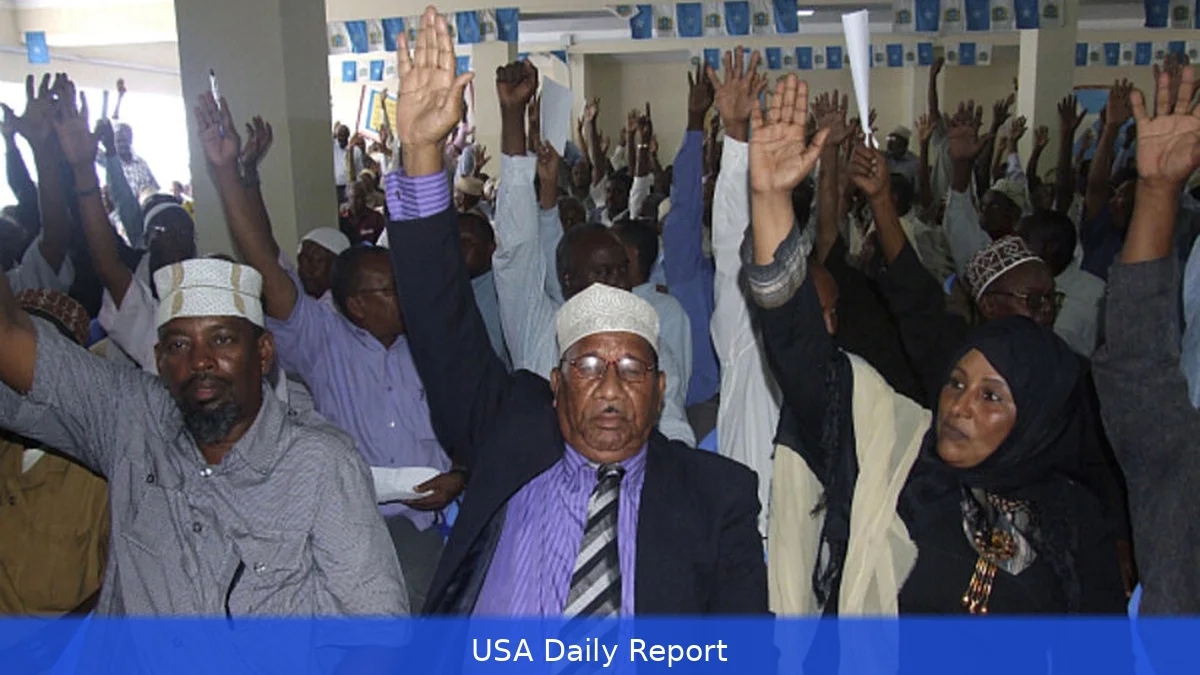
Somalia’s parliament erupted into scuffles as its mandate neared expiry.
Scene inside the chamber
Lawmakers in Mogadishu descended into shouting and physical confrontations during a joint parliamentary session after the speaker tried to press ahead with proposed constitutional changes, according to lawmakers present. The disruption forced the session to be suspended and then adjourned.
Speaker Adan Madobe introduced an unexpected agenda to amend five chapters of Somalia’s provisional constitution and began handing out written copies to legislators at the start of the meeting. Opposition MPs immediately objected, saying the move was an attempt to extend parliament’s term.
Abdirahman Abdishakur Warsameh, an opposition lawmaker, accused Speaker Madobe of trying to rush the process without following proper procedure. Videos shared on social media showed Internal Security Minister Abdullahi Sheikh Ismail, who also sits in the Upper House and backed the proposals, engaging in a scuffle with opposition lawmaker Hassan Yare. Other MPs tore up agenda papers, shouted slogans and blew whistles, bringing proceedings to a halt.
Madobe adjourned the session and warned that disciplinary action would follow for those who disrupted proceedings, but he didn't say when the deliberations would resume.
What’s at stake
Parliament’s current mandate is set to expire in April, while the presidential term ends in May. Lawmakers opposed to the proposed amendments said the changes would create a legal pathway for a two-year extension of parliament’s term, which critics fear would delay national elections and deepen political paralysis.
The stakes are clear. A month-long or multi-month delay in establishing a new legislature means the institutions that pass budgets, confirm ministers and oversee security policy could be operating without a fresh democratic mandate.
That vacuum matters in a country where governance and authority are already fragile. Somalia has been operating under a provisional constitution since 2012, and talks to finalize a permanent charter have repeatedly shown deep disagreements over how power should be shared between the federal government and regional states.
Security backdrop and historical memory
Somalia’s recent history shows how dangerous such disputes can become. In 2021, an attempt to extend political mandates under then-President Mohamed Abdullahi Mohamed sparked a constitutional crisis that led to armed confrontations in Mogadishu and pushed the country to the brink of wider unrest.
At this moment, the risk of violence is very real. Islamist militant group al-Shabaab has waged a long insurgency across much of the country, at times controlling significant swathes of central and southern Somalia. The group pledged allegiance to al-Qaeda in 2012 and has continued to press attacks against government forces and civilian targets.
Gridlocked political institutions make it harder to coordinate security efforts. The Transitional Federal Government and later federal authorities have relied on a patchwork of security arrangements — including African Union forces and regional security partners in past years — to hold territory and push back insurgents.

Political implications at home
The chaotic session exposed sharp splits inside parliament and between Mogadishu and regional leaders. Opposition lawmakers argued that pushing amendments without wide consultation would undermine the fragile federal compact and inflame tensions between clans and federal member states.
For many Somalis, the question isn’t only about legal technicalities. It’s about trust in institutions. Years of conflict, displacement and weak public services have made citizens wary of leaders who appear to move the goalposts to remain in power.
Some MPs backing the speaker say the amendments are a step toward consolidating governance and closing gaps in the provisional constitution. Opponents counter that any change that effectively buys time for incumbents will erode confidence and provoke protests — and possibly worse.
Regional and international fallout
Somalia’s location on the Horn of Africa means instability has wider implications. The country borders the Gulf of Aden to the north and has the longest coastline on mainland Africa, facts that have made its politics relevant to regional security and international maritime concerns for years.
At the end of 2006, Washington backed an Ethiopian intervention that ousted the Islamic Courts Union and reshaped Somalia’s political trajectory — a reminder that outside powers have long been drawn into Somali crises. That episode also helped spawn an insurgency that later evolved into groups such as al-Shabaab.
International partners and African Union troops have been part of stabilization efforts in the past. If the political stalemate deepens, those partnerships could face renewed strain as donors, troop-contributing countries and diplomats weigh how to support stability without appearing to endorse extensions of power.
How this matters to the United States
The United States has historical and strategic ties to Somalia, including past support for regional interventions aimed at countering extremist groups. The 2006 U.S.-backed Ethiopian action is one documented example of Washington’s involvement in Somali affairs.
Instability in Mogadishu could influence U.S. Policy choices on a range of issues: counterterrorism cooperation, humanitarian assistance, and diplomatic engagement. A government running past its mandate or a prolonged political vacuum complicates coordination with international partners on security operations and aid delivery.
The United States has changed its approach in the Horn of Africa over time, but it remains focused on stopping safe havens for extremists.xtremist groups means that political breakdowns in Mogadishu tend to register in U.S. Planning cycles.
Possible scenarios and pressures
Analysts and politicians in Mogadishu are likely to offer three broad responses: a negotiated compromise on a short extension for specific technical reasons; a legalistic route that amends the constitution to allow a longer delay; or a hardline approach that attempts to push changes through despite opposition. Each path carries risks.
A short, negotiated extension could buy time to organize credible elections if regional leaders and opposition figures feel enoughly included. But such deals are fragile and depend on private guarantees and implementation plans that have often broken down in Somalia’s past power-sharing deals.
If amendments are rushed through without broad buy-in, they risk provoking street protests and further fragmentation among elites. The 2021 crisis is a living warning of how quickly a dispute over mandates can spill into armed confrontation in Mogadishu.
So what happens next will depend on whether political leaders — from Speaker Madobe to regional presidents and opposition blocs — choose negotiation over brinkmanship. The immediate pressure point is the calendar: with parliamentary and presidential terms ending in April and May, decisions have to be made soon.
Whatever unfolds, international partners will face hard choices about how to support stability without underwriting undemocratic extensions of power.
Related Articles
- Peru delays presidential result after more than 52,000 voters get a one-day extension
- Investors Shrug at Fragile Iran Ceasefire as Stocks Bounce Between Hope and Risk
Madobe adjourned the session and warned that disciplinary measures would be taken against those responsible.
This article was created with AI assistance.


