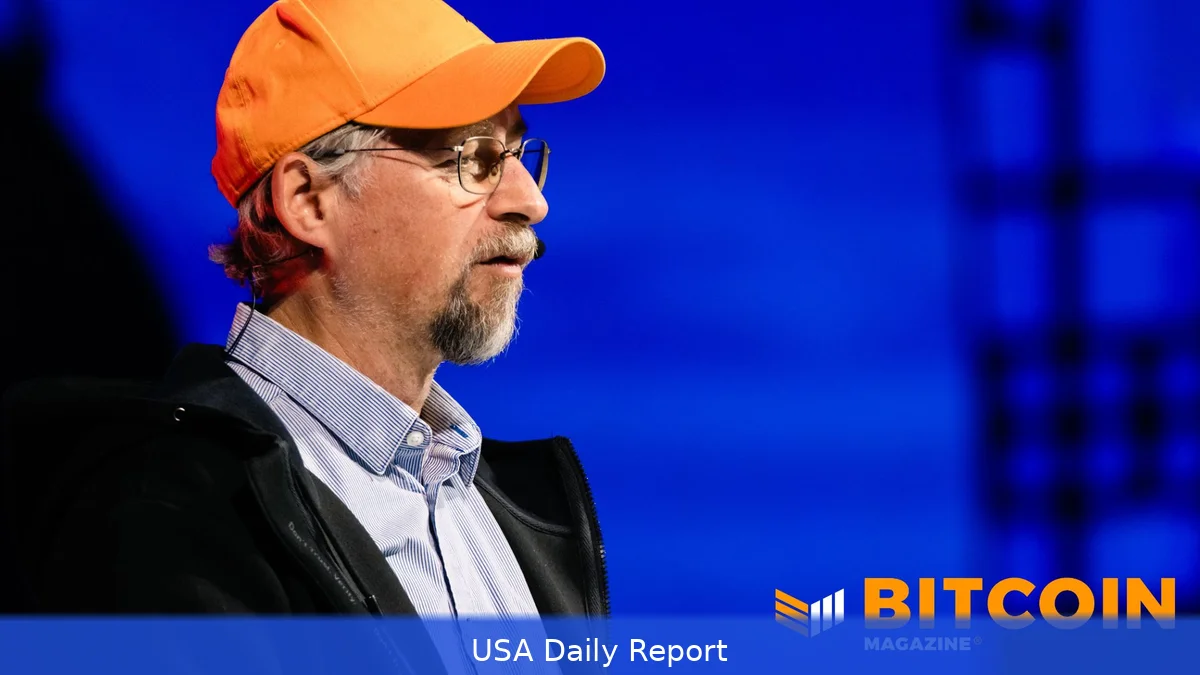
A reporter says he's identified Bitcoin's creator.
Claim and method
Look, this is the kind of story that has haunted the tech world for nearly two decades. John Carreyrou, New York Times investigative reporter, told an NPR interview that his probe points to Adam Back, a 55-year-old computer scientist, as the person behind the pseudonym Satoshi Nakamoto.
Carreyrou's reporting starts with the obvious hinge: the 2008 white paper titled "Bitcoin: A Peer-To-Peer Electronic Cash System." That nine-page paper launched the cryptocurrency era and did so from behind a curtain of anonymity. Carreyrou says he used artificial intelligence to compare writing patterns and other details, and that those tests repeatedly returned the same candidate — Adam Back.
Thing is — Carreyrou didn't rely on AI alone. He combined computational analysis with traditional reporting: archival research, timeline matching and direct interviews. He says common "writing ticks," including a particular habit with hyphens, matched between the writings attributed to Satoshi and Back's public writing. The man shared that observation bluntly: both were, in his words, "pathologically terrible at using hyphens."
Confrontation in El Salvador
Carreyrou flew to El Salvador to talk with Back in person at a conference where Back was scheduled to appear. The interview turned tense. Back denied being Satoshi, according to Carreyrou.
But the reporter says parts of Back's body language during the meeting — reddening of the face, fidgeting, awkward movements — left him unconvinced by the denials.
Carreyrou also pointed to a striking timeline coincidence: when Satoshi first appeared on cryptography mailing lists in late 2008, Back disappeared from public postings. Satoshi stayed active on those forums and others for about two and a half years, while Carreyrou says Back was absent. "It's like Bruce Wayne and Batman," Carreyrou told the interviewer. "When Batman comes out, Bruce Wayne is nowhere to be seen."
Why the identification matters
Bitcoin's origin has never been mere trivia. The identity of Satoshi touches questions of ownership, legal exposure, and the narrative that surrounds one of the world's most influential technological projects. If Carreyrou's case is accepted, it could force a reevaluation of who controls early Bitcoin addresses, who might hold large blocks of coins, and who could be a target in legal or regulatory probes.
Carreyrou framed his conclusion with conviction. "I'm pretty certain," he said, adding a narrow margin: "Might say somewhere between 99 and 100% certain." That line, delivered in the NPR interview by Carreyrou, is meant to signal a level of confidence rarely aired in such a long-running mystery.
Back's response and public posture
Adam Back, the subject of the allegation, denies being Satoshi Nakamoto. In the interview reported by Carreyrou, Back told the reporter he isn't the Bitcoin founder. He has long been known in cryptography circles for early work on proof-of-work concepts and for advocating electronic cash ideas among cypherpunks, which is why Carreyrou says the match seemed plausible in the first place.
Back's public reputation matters here. He's a recognized figure in cryptography and digital-currency conversations. Carreyrou's reporting stresses that Back had the technical skill and the ideological alignment with the electronic cash idea that Satoshi described. Still, Back's denial is part of the record — and his supporters have pushed back on the assertion.
Potential economic and political fallout
Point is, the identity of Satoshi isn't just an academic question for cryptography fans. Bitcoin now sits at the center of major economic and political debates in the United States: whether cryptocurrencies are commodities or securities, how to tax and regulate them, and how to deal with illicit uses. If the person behind Satoshi were publicly identified and tied to early Bitcoin holdings, that could make these debates.
For markets, the immediate reaction would likely be uncertainty. Bitcoin's price has historically reacted to news about its founders, major holders, and regulatory moves. Confirmation that a living individual created Bitcoin could prompt questions about the control and movement of the earliest mined coins — coins that for years have been dormant but represent large sums if moved.
On the policy side, U.S. Regulators and lawmakers who have been debating tighter oversight of crypto might see a new angle. An identified founder could be asked to explain design decisions, early choices about anonymity and distribution, and what, if any, role they had in the coin's early distribution. That could feed into congressional inquiries, enforcement matters and rulemaking by agencies that already scrutinize parts of the crypto industry.
History and context
Bitcoin's white paper was published in 2008 under the name Satoshi Nakamoto. Early postings and code contributions followed, but the true identity behind the name has stayed hidden. That secrecy shaped Bitcoin's story: it's a decentralized project born from the premise that no central authority — and, by extension, no single identifiable person — would steer it.
Carreyrou's narrative leans on that history. He argues that Back's prior advocacy for anonymous, untraceable electronic cash makes him a logical suspect. But Carreyrou also emphasizes gaps and odd matches in timelines as part of the case. The reporter's Bruce Wayne-Batman analogy is meant to highlight the way public absence and sudden online presence aligned with his hypothesis.
What's next
Still, the claim isn't a legal finding. It's an investigative conclusion offered by a veteran reporter who says computational and reporting methods converged on a single name. Back's denial remains on the record. And beyond those competing statements, there are practical limits: even if a single person is identified, proving legal ownership of early coins or changing the decentralized rules of a network isn't straightforward.
Carreyrou didn't announce criminal charges or regulatory action; he presented findings. He also described the investigative process on NPR, explaining how AI tools and traditional reporting overlapped. Mary Louise Kelly, the NPR host, led the interview and pressed on certainty and method.
Few have cracked the Satoshi mystery despite many attempts over the years. This latest claim will almost certainly prompt fresh scrutiny from technologists, journalists and legal teams. It will also likely prompt new commentary from the crypto community — defenders and skeptics alike — about what the identity, if verified, would mean for the project's future.
Related Articles
- Asia Markets Start Recovering as Tensions Between U.S. and Iran Ease
- Lebanon Wants Peace — But Hezbollah Answers to Tehran, Analyst Says
- Schroders CEO and Industry Chiefs Warn Iran War Could Keep Oil, Markets on Edge
John Carreyrou, New York Times investigative reporter, said: "I'm pretty certain. Might say somewhere between 99 and 100% certain."


