
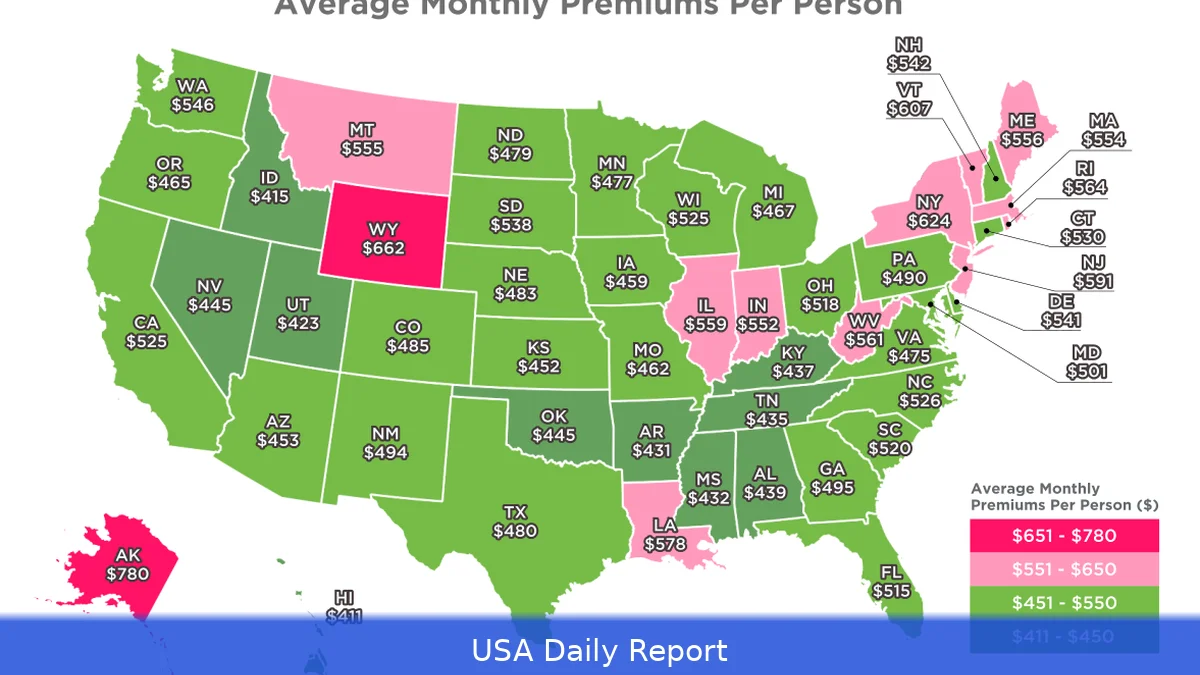
Shopping for the best health insurance means balancing price, coverage, and where you live. Costs vary wildly — from about $100 a month for a young adult on a low-cost Marketplace plan to $1,000+ a month for a high-end family plan. I've ranked the top 10 U.S. insurers for 2026, listed typical price ranges, outlined who is eligible for subsidies, and included a step-by-step shopping checklist; the price examples are for a 30-year-old unsubsidized shopper on a Silver-equivalent plan.
Quick-reference summary
Here are our top picks with example monthly ranges for a 30-year-old unsubsidized person buying a Silver-equivalent Marketplace plan — use them only as ballpark figures for your state marketplace.
- 1. UnitedHealthcare — $180–$420
- 2. Blue Cross Blue Shield (state plans) — $160–$400
- 3. Humana — $150–$360
- 4. Cigna — $170–$380
- 5. Kaiser Permanente — $130–$340 (available in select states)
- 6. Aetna (CVS Health) — $180–$410
- 7. Molina Healthcare — $110–$300
- 8. Oscar Health — $120–$350
- 9. Centene — $100–$280
- 10. Anthem — $160–$390
Typical deductibles for Marketplace plans can range widely; many fall between several hundred dollars and several thousand, depending on metal level and plan design. Typical out-of-pocket maximums for ACA-compliant plans in 2026: roughly $8,800 to $9,700 for individuals depending on plan design and state.
How we ranked these plans
We compared premiums and other costs first, then looked at network size, plan options, customer satisfaction scores where available, and how straightforward it is to apply subsidies in each market. We put price first: premiums, deductibles, copays and out-of-pocket maximums carried the most weight in our scoring. We gave extra credit to plans that show up in many state marketplaces, offer both HMO and PPO designs, and maintain steady provider relationships across regions. We also considered availability of value features: telehealth, integrated pharmacy, and HSA-qualified options.
Ranked list: best health insurance options in the U.S., 2026
1. UnitedHealthcare
Key features: Huge national network, robust telehealth, employer and individual Marketplace plans, HMO and PPO options.
Pros: Wide provider access, strong pharmacy discounts, integrated digital tools.
Cons: Price varies by state — can be high in some markets; narrow-network HMOs in other markets.
Who it's best for: People who want nationwide coverage and easy digital tools; those with complex care needs who prefer big networks.
Pricing (2026): Typical 30-year-old unsubsidized monthly premium: $180–$420. Deductibles commonly $500–$4,000; out-of-pocket max often $8,800–$9,700.
2. Blue Cross Blue Shield (state plans)
Key features: State-based BCBS companies dominate many markets. Broad networks and many plan types on state and federal marketplaces.
Pros: Local provider relationships, plentiful plan choices, trusted brand.
Cons: Pricing and customer service vary by state; some plans run higher premiums.
Who it's best for: People who want local provider access and multiple plan designs in their state.
Pricing (2026): Typical monthly premium for a 30-year-old: $160–$400. Deductibles $300–$6,500 depending on metal level; OOP max in the $8,800–$9,700 range.
3. Humana
Key features: Strong Medicare presence and Marketplace individual plans; often competitive premiums for seniors and families.
Pros: Good Medicare Advantage options, value-based primary care programs, competitive wellness benefits.
Cons: Limited service areas for certain plan types; employer plan differences complicate comparisons.
Who it's best for: Medicare beneficiaries and families in Humana service areas looking for preventive benefits.
Pricing (2026): Monthly premium for a 30-year-old Marketplace plan: $150–$360. Common deductibles $500–$5,000; OOP max $8,800–$9,500.
4. Cigna
Key features: International network strength, strong customer service tools, HSA-qualified plans.
Pros: Good for expats and people who travel; transparent cost tools.
Cons: Limited availability in rural markets; premium ranges can be high.
Who it's best for: Frequent travelers, professionals who want consistent national networks and digital billing clarity.
Pricing (2026): 30-year-old monthly premium: $170–$380. Deductibles $250–$4,500; OOP max typically $8,800–$9,600.
5. Kaiser Permanente
Key features: Integrated care model with system hospitals and employed physicians; strong preventive care focus.
Pros: Predictable costs, coordinated care, often lower total costs for routine care.
Cons: Available in only select states (CA, CO, WA, GA, MD, VA, DC and others). You must use Kaiser facilities for most care.
Who it's best for: People in Kaiser regions who prefer coordinated care and predictable billing.
Look, pricing (2026): Monthly premium for a 30-year-old: $130–$340. Deductibles often lower on HMO plans ($0–$1,500); OOP max $7,500–$9,000 depending on plan.
6. Aetna (CVS Health)
Key features: Large pharmacy integration via CVS, broad employer and individual offerings, many HSA options.
Pros: Good pharmacy network, robust digital tools, many HSA-compatible plans.
Cons: Pricing competitive but varies by market; out-of-network costs can be high on some plans.

Who it's best for: People who value pharmacy discounts and HSA tax benefits.
Pricing (2026): 30-year-old monthly premium: $180–$410. Deductibles $500–$6,000; OOP max $8,800–$9,700.
7. Molina Healthcare
Key features: Focus on Medicaid and Marketplace plans, usually low-cost options in many states.
Pros: Competitive premiums, strong Medicaid experience, often first-choice for subsidy-eligible households.
Cons: Network size can be smaller; specialty access varies by region.
Who it's best for: Low- and moderate-income individuals and families who qualify for subsidies or Medicaid.
Pricing (2026): 30-year-old monthly premium: $110–$300 unsubsidized. Marketplace deductibles may be lower on Medicaid-linked plans; OOP maxs align with ACA limits for private plans.
8. Oscar Health
Key features: Tech-forward insurer focused on transparent pricing and user experience.
Pros: Clear app, price-estimator tools, competitive young-adult plans.
Cons: Limited provider networks in some areas; still growing in many states.
Who it's best for: Young adults and tech-savvy members who want easy telehealth and price transparency.
Pricing (2026): 30-year-old monthly premium: $120–$350. Deductibles $500–$5,000; OOP max $8,800–$9,600.
9. Centene
Key features: Big Medicaid and Marketplace operator, often among lowest-cost choices for subsidy-eligible consumers.
Pros: Strong Medicaid footprint, low premium plans in many states, care coordination programs.
Cons: Commercial plan networks smaller than the biggest national carriers.
Who it's best for: Low-income households and families who prioritize low premiums and Medicaid access.
Pricing (2026): 30-year-old monthly premium: $100–$280 unpaid; subsidized costs commonly much lower. Deductibles vary but often competitive.
10. Anthem
Key features: Large BCBS licensee in many states, commercial and Medicaid plans, many provider partnerships.
Pros: Wide availability, many plan options, good provider reach in urban markets.
Cons: Customer satisfaction scores vary; prices can be high in some regions.
Who it's best for: Residents in Anthem service states who want familiar BCBS products and a broad network.
Pricing (2026): 30-year-old monthly premium: $160–$390. Deductibles $300–$6,500; OOP max around $8,800–$9,700.
How to figure out "how much is the best health insurance" for you — step by step
1. Check your eligibility. If your income is below your state Medicaid threshold you may qualify for Medicaid — often $0 premium and very low cost sharing. If you're 65+ or disabled, check Medicare eligibility and parts A/B/D/Advantage costs.
2. Estimate your income. For Marketplace subsidies, projected 2026 household income determines premium tax credits. Use the federal marketplace calculator or state exchange calculator.
3. Compare plans by total expected cost, not just premium. Add monthly premium + expected annual out-of-pocket spending based on regular prescriptions, specialist visits and expected care.
4. Look at provider networks. A cheap plan is useless if it doesn't include your primary care doctor or local hospital.
5. Confirm pharmacy coverage.
Check tier placement and copays for your drugs. Consider plans with integrated pharmacy benefits (CVS/Aetna, UnitedHealthcare pharmacy partners).
6. See if an HSA helps. If you’re healthy and want tax-advantaged savings, HSA-qualified high-deductible plans can lower monthly premiums while letting you save pretax.
7. Use official enrollment windows. Open Enrollment for the federal marketplace generally runs in the fall — be ready. Special Enrollment Periods apply for life events: marriage, birth, loss of other coverage.
Costs, fees and eligibility criteria to know (2026 specifics)
- Premiums: Vary by age, ZIP code, tobacco use, and plan metal level. Typical 30-year-old unsubsidized premiums in 2026 for commonly used plans range roughly $100–$420 monthly across top insurers.
- Deductibles: Marketplace silver and bronze plans often show deductibles from $500 up to $7,500. Gold and Platinum plans may have deductibles under $1,000 or none for many services.
- Out-of-pocket maximums: ACA sets caps; in 2026 common OOP maxs fall in the $8,800–$9,700 range for individuals depending on plan design and federal adjustments.
- Subsidies: Premium tax credits slide by income. Many households at 100–400% of the federal poverty level qualify for meaningful subsidies; rules and caps adjusted for 2026 may raise subsidy limits in some cases.
- Medicaid and CHIP: Low-income adults and children qualify based on state rules. Enrollment is year-round for Medicaid.
- Medicare: Part A often premium-free for those who paid Medicare taxes; Part B monthly premiums are adjusted annually by CMS — enrollment and costs depend on work history and income.
Common mistakes to avoid
- Choosing the lowest premium without checking the network or drug coverage. That saves money only if the plan covers needed doctors and prescriptions.
- Ignoring total annual cost. A cheap monthly premium with a high deductible can mean big surprise bills after surgery or hospitalization.
- Missing enrollment windows and losing subsidy eligibility. Mark Open Enrollment dates and gather documents early.
- Assuming employer coverage is always cheaper. Employer plans often have premium sharing, but compare deductibles, networks and dependent costs.
Alternatives and comparisons
- Short-term plans: Lower premiums but limited benefits and often exclude preexisting conditions. Not a substitute for ACA-compliant coverage.
- Catastrophic plans: Available to people under 30 or with hardship exemptions — low premiums, very high deductibles.
- Employer plans: Often better value due to employer contributions; check family coverage costs and out-of-pocket limits.
- Medicare Advantage: Many beneficiaries find lower premiums and extra benefits, but networks and prior authorization rules differ from traditional Medicare.
Final verdict
There’s no single "best" insurer for everyone. In 2026, cost differences matter most. For broad access and predictable care, UnitedHealthcare and Blue Cross Blue Shield state plans often lead. For coordinated, lower-cost care in certain regions, Kaiser is tough to beat. Still for low-income households and Medicaid enrollees, Centene and Molina often offer the lowest premiums. Use the steps above, check 2026 Marketplace prices for your ZIP code, and always weigh premium against expected total annual costs.
Start by estimating your 2026 household income, check your state exchange or healthcare.gov, and compare total expected yearly cost — that answers the question "how much is the best health insurance in USA" for your situation.
Related Articles
- How to apply for federal income tax (2026): step-by-step guide
- Self employment tax meaning: What it is, how it’s calculated, and how to pay it in 2026
- The best Zoom alternatives in 2026: Expert tested and reviewed
Bottom line: best health insurance depends on price, network and personal needs. Expect 2026 monthly premiums for many 30-year-olds to fall roughly between $100 and $420 depending on insurer and plan. Check your state marketplace, see if you qualify for Medicaid or subsidies, and compare total yearly costs — not just the monthly premium.
This article was created with AI assistance.


