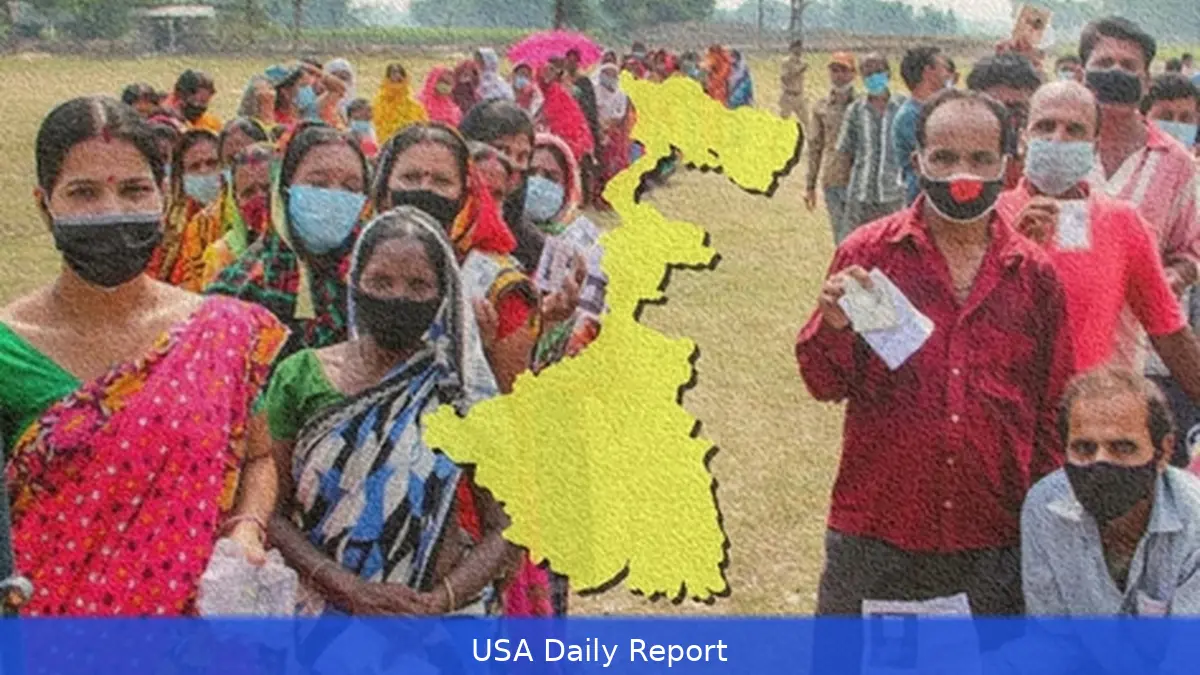
Nine million names were excluded from West Bengal’s voter lists. The move has sparked a political storm.
What happened
Election rolls in the Indian border state of West Bengal were revised and, in the process, roughly nine million names were struck off. The change has set off protests, claims and counterclaims among leading parties. Prime Minister Narendra Modi has described the exercise as a clean-up to find "illegal Bangladeshi infiltrators," a phrase that has been used repeatedly in campaign speeches.
Those figures, if accurate, would drastically change who gets to vote in West Bengal and could alter close races that depend on narrow margins.
Trinamool Congress — the party that governs West Bengal — has pushed back hard. The TMC says the language used by the central leadership is being aimed at Muslims. At the same time, the BBC report notes that many Hindu voters were also left out of the revised lists. That mismatch between rhetoric and effect is feeding anxiety across communities.
Why this matters now
The change comes while West Bengal — which borders Bangladesh — remains sensitive to migration issues and identity politics. Elections in the state are often fought on identity and migration issues. And when voter lists change suddenly and dramatically, voters and parties both take notice.
Removing a large number of voters is not just administrative: it affects who can vote and forces parties to rethink candidate choices, alliances and turnout tactics.
When leaders use the phrase 'illegal Bangladeshi infiltrators,' it ties the voter-list changes to broader debates over citizenship and migration that feature in national politics. The Trinamool Congress responded by saying that the term is being directed at Muslims. Those exchanges have hardened positions and increased public mistrust of the process.
Political fallout inside India
Locally, parties face uncertainty: targeted voter removals can leave established vote bases smaller or harder to predict, complicating campaign planning. That influences how candidates are chosen and what promises they make on the stump. It also alters the leverage of local leaders who deliver votes.
Nationally, the move feeds into a broader narrative about citizenship checks rolled out under central government initiatives. Opposition parties have accused the ruling party of using administrative steps for political ends. The TMC’s characterization — that the language is targeted at Muslims — has inflamed communal sensitivities in an already polarized environment.
And election administrators are under pressure. Voter-list revisions are supposed to be neutral exercises carried out by state and national officials. But when those revisions lead to mass exclusions, questions follow: were procedures followed? Were people given fair notice? Who will review appeals? Those institutional questions are now political questions.
Social and civic consequences
If people are taken off the rolls, they lose the practical ability to vote — a concrete impact on their political participation. Voting matters for local services, resource allocation and civic recognition. Excluded communities will have to seek redress, and the process for that can be slow, bureaucratic and intimidating.
Communal tensions can grow when groups feel singled out. The TMC’s framing — that the term used by the prime minister refers to Muslims — feeds a perception among some communities that the revision is discriminatory. At the same time, the BBC noted that Hindu voters were also removed, which complicates any simple narrative of targeted exclusion along religious lines.
So local communities face a double shock: a sudden loss of voting rights and a political environment in which identity is being used as a tool of mobilization. That combination raises the risk of demonstrations and legal challenges. It also strains civic trust in election management.
International ripple effects — and U.S. Interests
Events in West Bengal attract international attention because India is a major democratic actor with economic and strategic ties worldwide, including with the United States. Political instability or widespread unrest in any Indian state is watched in capitals around the world.
Frankly, Washington keeps an eye on large democracies because instability there can complicate cooperation on trade, security and regional diplomacy. The U.S. Is likely to follow developments because shifts in political sentiment in India can alter policy choices that affect bilateral ties. Trade negotiators, defense planners and human rights desks all track how domestic politics feed into foreign policy decisions.
At the same time, U.S. Lawmakers and civil society groups often react to reports about disenfranchisement or communal tension. That can influence congressional debate on relations with India, especially in forums where human rights and democratic norms are discussed. Corporations with investments in India will also watch; sustained unrest can affect business confidence and supply chains, particularly in sectors that rely on stable local governance.
Economic implications
Politics and the economy interact: sustained unrest or legal battles over voter lists could slow local business and make investors wary. Investors tend to pull back when political risk rises, especially if changes affect rule of law or governance.
For West Bengal specifically, any disruption to administration can slow permits, projects and local government spending. That has a knock-on effect on employment and services. For companies with supply chains in the region, delays or instability mean higher costs.
That said, the scale of such economic impacts depends on how long the dispute lasts and whether it spreads. Short-term unrest creates friction. Prolonged turmoil can dent investment plans and consumer confidence.
Legal avenues and the next steps
Under the Indian system, people who find themselves removed from rolls can seek redress through administrative appeals and, if necessary, the courts. The BBC report indicates broad concern but doesn't list outcomes of specific appeals. So what happens next will be shaped by how electoral authorities handle objections and how courts rule on any legal challenges.
Political actors can also respond at the ballot box. Parties may try to mobilize excluded voters or pivot to different constituencies. Local leaders will be watching turnout figures closely; those numbers will tell a lot about the practical effect of the revision.
And civil society groups and media will likely keep reporting on who was removed and why. That transparency matters because it shapes public opinion and the credibility of the electoral process.
What to watch
Look for several specific signs: whether voters successfully regain registration, whether protests escalate, and whether courts or electoral bodies step in. Also watch whether the narrative around the phrase "illegal Bangladeshi infiltrators" evolves — whether it stays central to campaigning or fades as procedural fixes are implemented.
For now, the key detail remains the scale of the exclusions and the political reaction they generated.
Related Articles
- Peru Holds Presidential Vote; No Clear Front‑Runner as Voters Face Ninth Leader Bid in a Decade
- Hungarians Vote in Pivotal Election That Could Unseat Viktor Orban
- Asha Bhosle, Bollywood’s iconic voice, dies at 92
Prime Minister Narendra Modi has suggested the clean-up aims to identify "illegal Bangladeshi infiltrators."


