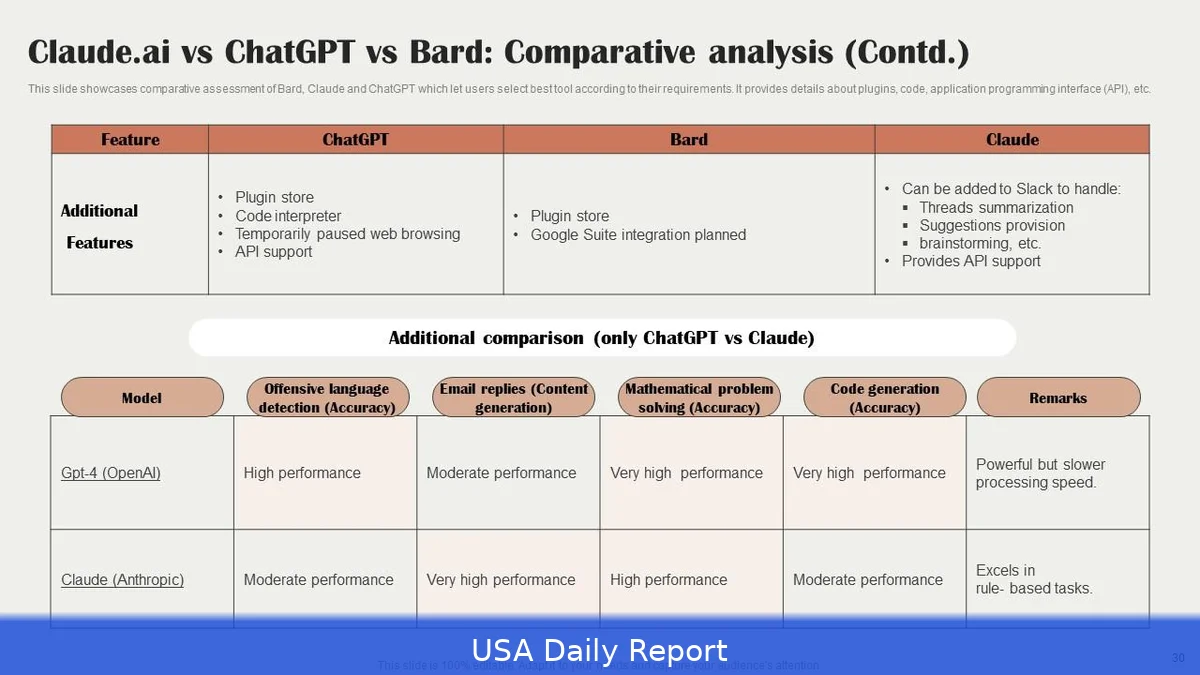
A recent comparison between two leading AI tools—Claude and ChatGPT—reveals big gaps in how they handle retirement and Social Security planning. While Claude edges out ChatGPT on several fronts, experts warn neither AI is ready to replace human financial advisors.
AI Steps Into Retirement Planning
AI is being used in many areas, but retirement planning still presents real challenges. Recently, GOBankingRates tested two popular AI models, Claude and ChatGPT, to see which one could craft a smarter financial plan for a 40-year-old aiming to retire on $100,000 a year.
They asked the same question to both AIs and then brought in financial planners to review the results. The verdict? Claude came out ahead, but both had glaring issues.
Where Claude Shines
Sure, claude tackled important details ChatGPT missed. It factored in Social Security benefits and highlighted the advantage of delaying claims until age 70, which can boost monthly payouts significantly. ChatGPT didn’t include this crucial strategy.
Claude factored in a 22% tax bracket, inflation estimates, and costs such as healthcare and disability insurance. It even mentioned health savings accounts and flexible spending accounts, which are vital for managing medical expenses in retirement.
Phil de la Motte, a financial planner at Prospero Wealth who reviewed the plans, said Claude ‘‘beat ChatGPT in most areas’’ and didn’t miss anything ChatGPT covered. That’s a win for Claude’s approach in building a more comprehensive picture.
Big Gaps Remain
But neither AI accounted for risk tolerance or risk capacity, which are cornerstones of any solid retirement plan. ‘‘That’s a big issue,’’ de la Motte said. The planners also found that both AIs used overly optimistic assumptions about investment returns.
Instead of running Monte Carlo simulations—which provide a range of possible outcomes and probabilities—both AIs relied on fixed, perpetual positive returns.
This simplification might make people believe they need less savings than necessary. On the flip side, both AIs used a fixed 4% withdrawal rate, which might result in overestimating the money needed. Neither suggested adaptable spending strategies that adjust to changing market conditions or personal circumstances.
AI’s Role in Financial Advice
Eric Franklin, a CFP at Prospero Wealth, reviewed the ChatGPT plan and found ‘‘the math is literally wrong.’’ His colleague, de la Motte, warned against relying solely on AI for life-changing financial decisions. ‘‘It’s clearly missing quite a few things a good planner would immediately notice,’’ he said.
Still, de la Motte admitted that AI can be ‘‘a good place to start’’ for people who haven’t seriously thought about retirement savings. With precise prompts, AI models can outline basic strategies and highlight topics users might overlook initially.
Economic and Political Implications
AI tools entering the retirement planning space could reshape how Americans prepare financially for their later years.
Roughly 10,000 baby boomers turn 65 every day, increasing pressure on Social Security and retirement funds nationwide. Accessible AI guidance might help some people improve their savings habits and optimize Social Security claims.
But there’s a risk: if people trust AI-generated plans without understanding limitations, they could make costly mistakes. That could lead to underfunded retirements, greater reliance on public assistance, and increased strain on government programs.
The Social Security Administration already faces challenges funding benefits for future retirees. If AI advice encourages delaying benefits to age 70, that might reduce short-term payouts but increase lifetime benefits for some. Policymakers could see shifts in when and how benefits are claimed, impacting Social Security’s financial health.
The Future of AI in Financial Services
AI is clearly becoming more important in personal finance. Firms are exploring how to integrate generative AI into tools for budgeting, investing, and planning. But experts urge caution. ‘‘AI can’t replace human judgment,’’ Franklin emphasized.
Human advisors bring experience, intuition, and personalized understanding that AI lacks, especially when markets turn volatile or personal circumstances change abruptly. AI models also depend heavily on the quality of input prompts and data, which can vary widely.
Yet, with continuous improvements, AI could become a valuable assistant—flagging important financial considerations, running scenarios quickly, and educating users. Combining AI’s quick calculations with human insight will be crucial for reliable, tailored advice.
Until then, the smartest move for most Americans is to treat AI-generated retirement plans as a rough draft. Consulting a qualified financial planner remains essential, particularly for navigating complex issues like tax strategies, risk management, and Social Security timing.
Related Articles
- Jet Fuel Price Swings Push Airlines to Raise Fees and Cut Flights, Leaving Travelers Paying More and Flying Less
- Bank of America Flags Risks for Oil Stocks Despite Iran Ceasefire
- World Bank Prepares to Release $20 Billion in Urgent Post-War Aid
Claude’s edge over ChatGPT shows AI is making strides in retirement planning, but big gaps remain. For now, these tools can spark ideas but not replace professional advice.


