
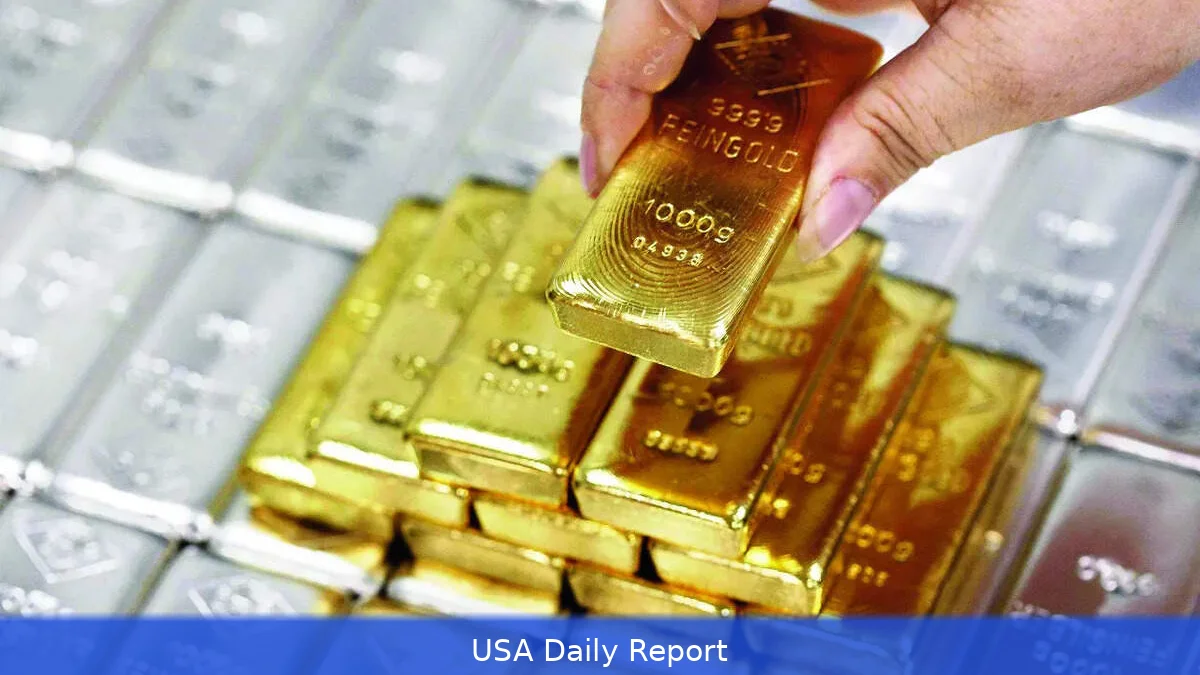
Gold prices took a sharp dive last week, falling into what traders call 'bear market' territory. But some financial experts remain confident the precious metal will rebound significantly over the next decade.
Gold Slides Amid Strengthening Dollar and Easing Tensions
Last Tuesday, gold prices dropped as much as 2%, reaching lows near $4,335 an ounce before partially recovering to around $4,318 in futures trading. Silver followed a similar downward path. This decline pushed gold down roughly 21% from its late January peak above $5,590, marking a clear entry into bear market territory.
Many market watchers see this slump as just a short-term shakeup, not a fundamental change in gold’s long-term appeal. The recent selloff occurred as the U.S. Dollar gained strength and geopolitical tensions showed signs of easing after President Donald Trump announced a five-day pause on planned U.S. Strikes targeting Iran’s energy infrastructure.
Safe Haven Status Remains Intact
Gold has long been a popular asset during uncertain times. Its reputation as a safe haven means investors flock to it when political or economic instability looms. Persistent geopolitical risks — including tensions in the Middle East — combined with strong demand from central banks, continue to underpin a bullish outlook for the metal.
Ed Yardeni, president of Yardeni Research, exemplifies this view. Despite lowering his year-end gold forecast to $5,000 per ounce from $6,000, he still predicts gold could hit $10,000 by the end of the decade. That’s roughly double the current price and more than 15% higher than his revised year-end target.
Dollar Strength and Profit Taking
The greenback’s recent upswing has played a key role in gold’s pullback. Since gold is priced in U.S. Dollars, a stronger dollar makes it more expensive for holders of other currencies, reducing demand.

The dollar’s rally likely triggered some investors to take profits after the metal’s earlier run-up.
But the dollar’s strength may not last. Many analysts expect the Federal Reserve to keep interest rates relatively low for some time to support the U.S. Economy amid ongoing global uncertainties. Lower rates usually weaken the dollar and boost gold’s appeal as a non-yielding asset.
Central Banks and Geopolitical Risks Keep Demand High
Central banks around the world continue to buy gold to diversify reserves away from cash and bonds. This steady purchasing supports prices even when investor appetite cools temporarily.
Meanwhile, geopolitical risks haven’t disappeared. The pause on strikes against Iran may calm markets for now, but the situation remains fragile. Any flare-up could send investors rushing back to gold as a safe place to park money.
Recent history shows gold prices surged during conflicts and economic uncertainty, like the COVID-19 pandemic and the Russia-Ukraine war. The metal’s resilience during turmoil suggests its long-term fundamentals remain solid despite short-term setbacks.
What This Means for U.S. Investors and the Economy
For American investors, gold’s volatility presents both risks and opportunities. Those betting on a quick rebound might see losses if the bear market lingers. Still, many financial advisors recommend holding some gold as a hedge against inflation and market shocks.
On a broader scale, gold’s price movements can signal investor confidence or fear. Sharp drops often coincide with dollar strength or easing crises, while rallies point to rising uncertainty. Policymakers watch these trends closely, as they affect everything from inflation expectations to currency stability.
Gold also influences inflation indirectly. Rising prices can reflect concerns about future inflation, prompting central banks to adjust monetary policy. The Fed’s balancing act between supporting growth and controlling inflation means gold’s path could be bumpy but upward over time.
Related Articles
- Seoul appeals court hands ex-first lady Kim Keon Hee 4-year sentence
- Sinai live-fire drills revive Oct. 7 fears
- Gas tops $4.18 as consumer confidence inches to 92.8
Even with the recent drop, seasoned market watchers still believe gold will rebound over the long term. As geopolitical tensions simmer and central banks keep buying, the metal’s role as a safe haven isn’t going away anytime soon.
This article was created with AI assistance.


