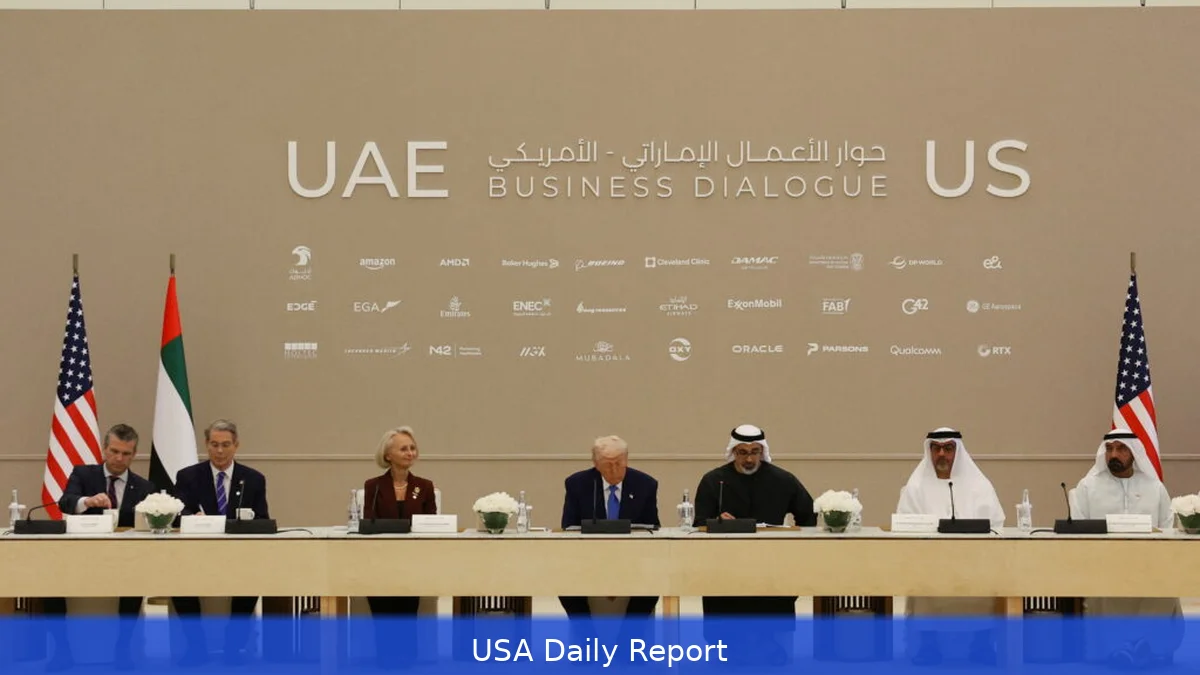
Blackstone moved $250 million into the UAE this month. Jane Fraser told staff she still backs business in the region.
Big bets as conflict tests a safe-haven pitch
Blackstone Inc.'s decision to commit $250 million to an inbound private equity deal in the United Arab Emirates marked a notable moment for Gulf markets. It was the first such inbound Gulf private equity transaction announced after Iran began attacking regional hubs — an episode that put the emirates' carefully built image of stability to the test.
Look, the headline number matters. Three hundred million would have made a splash. Two hundred fifty million still does.
That move came as global banks and asset managers weighed political risk against opportunities to deploy capital at scale. Citigroup Inc.'s chief executive, Jane Fraser, underlined the bank's upbeat stance toward the region in a 600-word memo to staff that stressed continued commitment to Gulf business lines.
Big financial firms are now showing their risk calculations publicly, not just keeping them private. Asset managers and investment banks are balancing the immediate headwinds tied to regional hostilities against longer-term commercial ties with oil producers, sovereign wealth funds and expansion-hungry private firms.
Why big firms are leaning in
The Gulf states have spent decades selling themselves as low-risk places to park capital. The UAE in particular pitched a message of security, logistics access and business-friendly regulation to attract multinational corporations and private equity.
Thing is, that reputation was put under pressure this year. Attacks attributed to Iran on regional hubs raised questions about the vulnerability of shipping routes, logistics centers and financial flows that depend on predictable conditions.
Even with concerns, Blackstone's deal shows big players believe they can still make money. Jonathan Gray, President and Chief Operating Officer at Blackstone, has in the past framed the firm's strategy around finding scale where others hesitate. While Blackstone's internal playbook was not released with the deal, the firm's public posture—continuing to move capital into the region—signals confidence that the economics still add up.
Citi's Jane Fraser made a similar point, albeit in corporate communication rather than a deal announcement. Her 600-word memo, circulated internally, reiterated the bank's enthusiasm for its Gulf operations and its intent to stick with regional clients through turbulent periods.
What this means for markets and investors
When big-name firms invest, global investors often take it as a sign to reconsider their own moves. When an industry leader puts cash to work, other managers often reassess their appetite for exposure. That's one reason why inbound deals from big names get noticed beyond their size.
Still, the economics aren't identical across sectors. Energy-linked investments react to oil price swings and geopolitical headlines. Real estate and logistics deals hinge more on local demand, regulatory frameworks and the ability to attract international tenants or shipping contracts.
Blackstone's commitment—targeted at private equity opportunities—suggests buyers believe valuations and exit paths remain workable even with elevated political noise. Private equity often looks several years out; the bet is that current instability will be temporary relative to the investment horizon.
For U.S. Investors and money managers, the Gulf offers both exposure to energy wealth and to diversified growth stories: fast-growing financial centers, expanding consumer markets and sovereign wealth funds that have become major global deal partners. Those linkages can mean U.S. Pension funds, endowments and mutual funds indirectly benefit when Gulf capital flows into global markets.
Political risks and regulatory questions
The risks are still there. Military escalations, supply-chain disruptions and insurance-cost spikes can all hit returns. If attacks on logistics hubs continue or broaden, the cost of doing business—higher insurance premiums, rerouted shipping, contingency operations—can compress margins.
What keeps many investors watching is the host governments' response. The UAE, for example, has long sought to present itself as a reliable partner for Western capital. A tested image forces officials into a choice: double down on security and diplomatic outreach, or risk slower capital inflows if perception slips.
At the same time, regulatory scrutiny in the U.S. And Europe over links to Gulf sovereign wealth funds and state-affiliated entities remains a factor. Compliance checks, national security reviews and reputational due diligence add time and cost to cross-border deals. Firms factor those timelines into pricing and strategy.
How banks view the trade-off
Banks like Citigroup have two incentives: maintain client relationships and protect franchise value. Losing a flow of deposits, corporate mandates or underwriting mandates in a major region is painful. So banks often accept near-term volatility to preserve long-term ties.
In her memo, Jane Fraser conveyed that calculation in internal terms, aiming to reassure staff and clients that Citi intends to remain a committed player. That kind of top-down messaging matters inside big banks: it shapes risk tolerance, capital allocation and the pace of new business development.
Meanwhile, bank boards and risk committees keep a close eye on capital and liquidity. If conditions deteriorate materially, firms have procedures to scale back exposures. But so far, the public posture from leading firms suggests they're not pulling back en masse.
Where the U.S. Comes in
The U.S. Has deep economic ties to the Gulf through energy trade, defense cooperation and investment linkages. American firms that participate in global markets feel the ripples of Gulf political risk via commodity prices, capital flows and corporate earnings.
For policymakers in Washington, the calculations are different but connected: interruptions to energy shipments can affect consumer prices and inflation. Major U.S. Investors moving into the Gulf can reduce pressure on regional governments to sell assets at fire-sale prices during crises, preserving longer-term stability.
But Not just about economics. Diplomatic moves, sanctions policy and military posture shape the backdrop for every investment decision. The interplay between commercial commitments and geopolitics will influence whether private-sector bets pay off.
Bottom line: the big firms are making headline bets. Their moves will influence other investors' choices, at least for now.
Who's right depends on whether Gulf stability holds and whether the economics of specific sectors—energy, logistics, real estate, finance—remain attractive relative to alternative opportunities elsewhere.
Related Articles
- Investors Rally as US-Iran Ceasefire Offers Fragile Hope Amid Lingering Tensions
- Iran Conflict Shakes Global Power and Economy: Winners and Losers Emerge
- Banks Hold Firm on Gold’s Long-Term Rise Despite Recent Slump Amid Geopolitical Shifts
Jane Fraser, Chief Executive Officer at Citigroup Inc., circulated a 600-word memo reaffirming the bank's enthusiasm for its Gulf business.


