
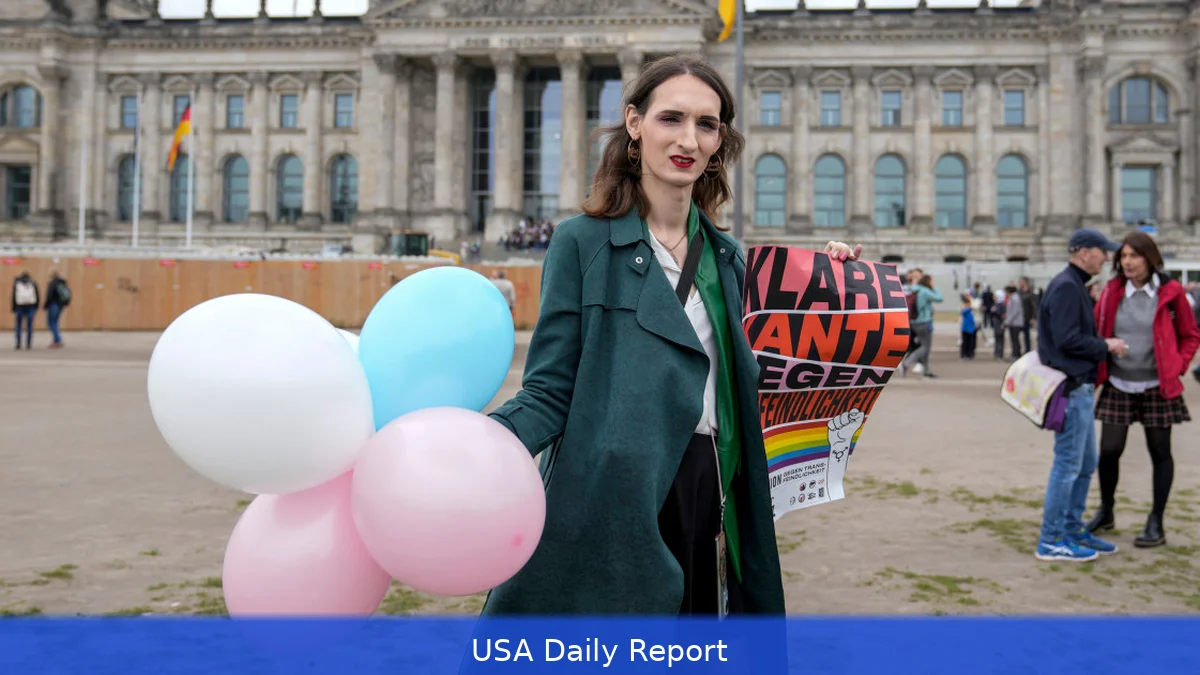
A German transgender far‑right extremist was arrested in the Czech Republic.
What happened
A person described in German media as a transgender far‑right extremist was taken into custody in the Czech Republic, law enforcement officials reported. The arrest came shortly after a major change in German law that expanded legal recognition for transgender people. Authorities in both countries have said little about the suspect's identity or the precise charges while inquiries continue.
European media and security services are watching the case closely.
Czech police confirmed the detention to international outlets and said their work was ongoing. German agencies have been in contact with counterparts in Prague, according to officials familiar with cross‑border procedures. Travel within the European Union means suspects and witnesses can move quickly, and so cooperation between national police forces is now standard practice.
Because the arrest came soon after the Self‑Determination Act took effect, commentators are asking whether recent social and legal shifts are affecting extremist politics.
The law at the center
Germany's Self‑Determination Act has just come into force and strengthened the rights of transgender people. The legislation allows people to change their gender marker and first name through a simple declaration at a registry office, instead of a judicial ruling.
The reform replaces a more cumbersome court process that many rights groups and transgender people called humiliating and slow. Supporters hailed the change as reducing bureaucratic hurdles and protecting privacy by removing the need for public court proceedings.
Opponents argued the new rules were too permissive and voiced concerns about unintended consequences. Those criticisms have often come from conservative and far‑right voices, who framed the law as a social shift they reject. The debate over the law has been one of the more visible social policy fights in Germany this year.
Why the arrest matters internationally
This detention shows that political disputes in one country can quickly affect neighboring states. Many extremist groups in Europe run networks that cross national boundaries. They share ideas online, shift people and money across borders, and sometimes use neighboring countries as transit points.
Stopping those networks means police forces must coordinate on legal, logistical and political fronts. Europol and bilateral police teams regularly handle cross‑border cases, but arrests still demand careful evidence gathering and mutual legal assistance. That means speed and clarity matter; delays can allow suspects to vanish into other countries.

The arrest will therefore be watched by law enforcement officials beyond Germany and the Czech Republic. European partners want to know whether the case indicates a broader operational threat or a single isolated act. If there are signs of an organized group or cross‑border plotting, the response could step up quickly.
Political implications in Germany
Germany's government has presented the Self‑Determination Act as a move toward modernizing civil rights and simplifying state interactions with citizens. Supporters say it's a correction of past injustice and a practical fix to an overly legalistic system.
But the law has also become fodder for opponents. Far‑right parties see it as emblematic of cultural change they oppose and use it to mobilize voters. The arrest of a figure described as a transgender far‑right extremist amplifies those tensions — because it collapses two charged topics into one news item: gender identity and political violence.
That overlap matters because it muddies public debate and hands talking points to both supporters and opponents. Advocates for transgender rights can point to the law as a step that protects vulnerable people. Opponents can point to the arrest and argue that rapid social change has unintended security costs. Neither claim is a neat fit to the facts at hand, yet both will shape headlines and campaign messages in local and national politics.
Economic and social ripple effects
Economically, the Self‑Determination Act itself is unlikely to have large direct costs. The administrative change mainly shifts procedures from courts to registry offices. That can lower legal fees for individuals and reduce courtroom backlogs. But big political fights have economic consequences too.
Firms tracking public opinion could change their diversity and inclusion policies in response. Employers want legal clarity. They also aim to avoid reputational risk and workplace disruption. If the national conversation heats up, human resources policies and corporate communications strategies could get more attention — especially ahead of local or national elections.
A single arrest is unlikely to dent tourism or business unless it triggers a wider, sustained crisis. Still, a sustained national crisis or a series of security incidents would weigh on investor confidence and travel decisions. Right now, there's no public evidence of that scale in this case.
How this touches the United States
At first glance, an arrest in Europe may seem remote to U.S. voters, but political messaging often crosses the Atlantic. But there are concrete links. First, trans rights and far‑right politics are both active issues in American public life. U.S. Political actors study European debates and sometimes borrow messaging. Campaign operatives and interest groups look internationally for examples that support their arguments.
Second, security cooperation between the U.S. And European partners means American agencies watch these developments. The U.S. Federal Bureau of Investigation and the Department of Homeland Security have an interest in transnational extremist activity that could affect U.S. Soil. Agencies can share tips, run criminal-record checks and coordinate travel restrictions when they work together.
Third, multinational companies with operations in both Germany and the United States track social policy because it affects hiring, benefits and corporate culture. Shifts in German law and public debate can inform corporate decisions elsewhere, including in the U.S., about healthcare coverage, parental leave and anti‑discrimination policies.
What to look for next
Investigations in cross‑border cases often take time. Authorities will be piecing together travel histories, communications and possible links to networks. Watch for official updates from Czech and German police and any public statements from prosecutors.
Media coverage will likely test how much the arrest actually connects to broader extremist plots versus being an individual case. If prosecutors disclose charges, that will give a clearer legal picture. If they don't, speculation will fill the gap — and that can drive political reaction more than facts do.
Finally, follow how German lawmakers and political parties respond. Legislative bodies sometimes amend rules after high‑profile incidents; sometimes they double down on reforms to show resolve. Either path would shape the next phase of debate over the Self‑Determination Act.
Related Articles
The Act allows people to change their gender marker and first name through a simple declaration at a registry office, instead of a judicial ruling.
This article was created with AI assistance.


